Showing posts with label Writers. Show all posts

Saturday, 23 May 2026

Irredeemable Evil


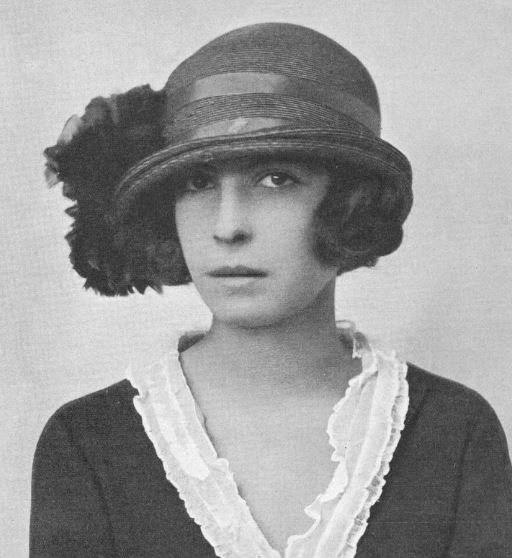
The Morgan family and Tredegar House have always fascinated me, in particular Evan Morgan, Papal Knight, sexual predator and Satanist, along with his more tragic sister, Gwyneth Morgan, who died in murky waters. 

In ill health, weakened by enteric typhoid and drug abuse, Gwyneth was a severe embarrassment to her family and was all but incarcerated in the ‘Niche,’ a large house in Wimbledon. 

In the early hours of Thursday, December 11th 1924 she slipped out of the house and vanished. Six months later, her body was fished out of the Thames near Wapping.

The mystery is manifold. By all accounts, Gwyneth was severely ill, unable to walk very far without feeling tired, and spent much of her time in bed. On the night she disappeared, London was shrouded in one of those legendary fogs, an impenetrable ‘pea-souper,’ and the nearest entry point to the Thames was Putney Bridge, four miles from where she lived. It is hard to believe that a semi invalid could walk four miles in thick fog through unfamiliar streets and fall into the river at Putney Bridge. The fact that her decomposed body was found in Wapping, even farther away compounds the mystery. It would have to have floated along one of the world’s busiest waterways beyond Hammersmith and Rotherhithe without being seen.

Nature abhors a vacuum and so does the press. In the absence of hard facts, newspapers had a field day with theories involving white slavers, Chinese opium lords, and lesbian lovers. 

It is in this context The Gift was born.

 The heroine in The Gift is an orphan, Lizzie McBride, and it is her interaction with the Morgan family that drives the story. 

Born in a Liverpool slum, Lizzie McBride is the daughter of an Irish witch who dies when Lizzie is barely twelve, leaving her in charge of two younger sisters and a grieving father. When her father commits suicide, Lizzie is caught between two worlds. An aunt and uncle decide the three orphans would be better off with them in America. Just as they are about to board ship, Lizzie, on an impulse she cannot explain, runs off, and her life changes forever. 

Pursued by a vengeful aunt, Lizzie cannonades into the young and charismatic magician, Aleister Crowley, who for his own reasons, introduces her to Lady Gwyneth Morgan, daughter of the richest family in Wales and sister to the flamboyant occultist, Evan Morgan. 

Unknown to her, Lizzie possesses one devastating gift. When the occult world discovers this, governments and powerful individuals seek to harness it. Only one man can protect her: the magician John Grey.

The Gift is the first book of a trilogy, beginning in 1912 and ending in 1941. The three books trace the magical rivalry between two sisters, Elizabeth and Elsie McBride, interweaving between the likes of Evan Morgan, Aleister Crowley and major historical events. All of it initially inspired by the rich but wasted lives of Evan and Gwyneth Morgan. 


The story continues with Bloodline and the trilogy ends with Bloodfall which bring events up to 1941, the German invasion of Russia, and a devastating occult ceremony within the Rollright stones. 

The trilogy explores the supernatural, the occult underbelly of the English aristocracy and its links with the emergent Nazi movement. It is grounded in historical fact, weaving fiction where there are gaps in the record, and spotlighting key figures of their time: Aleister Crowley, Churchill, Brendan Bracken, Litvinov, Shaw and Guy Burgess—even Hitler and Stalin. 

But over-shadowing all and unifying the trilogy is the tragic, relentless corruption of an innocent victim to one of irredeemable evil.


After a time, when all was done and dusted, I came to miss these people, every one of them. And then I realised, my heroes, being essentially ageless, offer scope for another series— this time in the future. One of the new books, Rain has just been published, another, Possession, is on its way—and watch this space for the third. All books have their merits, but the Gift Trilogy and what follows are amongst my favourites.


Friday, 6 March 2026

Tai-Lin—— OUT NOW!


It’s not often you think what goes into a story. In the case of Belia and its sequel Tai-Lin, the influences, conscious and unconscious are there to be found. As a child, I was swept away by Stevenson’s Treasure Island, The Black Arrow, and Kidnapped; in particular, his exploration of villainy, its attraction and moral complexity. I didn’t know these terms as a child, but I most definitely ‘got it.’ I also ‘got’ Alan Garner, Susan Cooper, Moorcock’s Elric of Melnibone, and later I also ‘got’ history. 


I’ve often been asked my favourite period, and on reflection, it has to be the Eighteenth Century, possibly because it’s rarely taught in British schools. But for me, it’s the period when the world opened out in all its weird and wonderful glory. 


Eighteenth century China marked the peak of the Qing dynasty dominating vast territories across Central Asia and Tibet. Neighbouring India saw the gradual decline of the Mughal empire and European incursion. In the forests of North America, you saw conflict between the English and French, Iroquois and Huron, and the tribes of the plains and faraway Rockies not yet knowing what was to come.


All of it reflected in the plaques, graves and memorials in obscure English churches; ploughboys and sons of gentlemen who met their deaths in foreign lands. An England of ex-pirates and highwaymen. It’s also the world of the Great Witch Belia, Tai-Lin, Rafe Sadler and Rosie his daughter, her boyfriend Jai from the far future.

And Tai-Lin, the book?

In a sentence:

A sweeping adventure exploring corruption, morality, and the pitfalls of time travel romance.

You want more?

Tai-Lin is a story set within three timelines: Wales in the C18th, present day Newport, and a far future world, where a pastoral 'Golden Age' is enforced by corrupt and ageless Shepherds—a world now threatened by demons in search of three quantum opals. Individually, the opals allow limited time travel. Used together they would allow the colonisation of time itself.

The demons have one of them. Rafe Sadler, an C18th highwayman and Rosie his daughter, hold the other two and are now being hunted. So too, is the brilliant but elusive Tai-Lin who created the three time-jewels.

A perfect present for yourself, your child or any passing ragamuffin.


Saturday, 3 January 2026

The State


One of the finest books on American Democracy was written by Alex Tocqueville in 1835. The two volume Democracy in America is rich in observation and insight, as relevant now as then, and frighteningly relevant to what we now take for granted throughout much of the Western World. 

Talking about bad government, he writes:

‘It does not tyrannise, it hinders, it represses, it enervates, it extinguishes, it stupefies, and finally it reduces each nation to being nothing more than a flock of timid and industrious animals, of which the government is the shepherd.’  


To be honest, I  think Tocqueville here unfairly maligns the ‘shepherd’. My initial reaction was to suggest replacing 'shepherd'  with 'wolf' but then I'd be guilty of maligning wolves, known for their nobility, intelligence, courage, and loyalty to the pack. 


So, if not shepherd or wolf, what then? Maggot, is a nice suggestive image. In Tocqueville's words:


'each nation to being nothing more than a flock of timid and industrious animals, of which the government is the maggot.' 


It nicely conjure up the image of the nation as a mound of flesh writhing in parasites, but then maggots are comparatively mindless, motivated purely by a lust to feed. 


Finally, I arrived at the frightening parasitic fungus —Ophiocordyceps unilateralis. Now this works:  ‘each nation. . . being nothing more than a flock of timid and industrious animals, of which the government is a parasitic fungus.' (The full term Ophiocordyceps unilateralis being a bit of a mouthful.) 


Happy New Year!


By David P. Hughes, Maj-Britt Pontoppidan - https://journals.plos.org/plosone/article?id=10.1371/journal.pone.0004835, CC BY 2.5, https://commons.wikimedia.org/w/index.php?curid=17917778


Friday, 21 November 2025

Rain

Rain

Yes, a new book, the latest occult adventures of John Grey and Elizabeth McBride.  But where does the story begin? 1680, when John Wickins creates two alchemical mirrors? 

One contains a crack, a glimpse into Hell, an opening for demons.

The other allows access into another dimension, one where a nightmare awaits. 


In 1937 one of the mirrors comes to life.

In 2035 children disappear—and then one child returns….


For those who don’t know, most of my novels and stories centre around Newport, Wales—a dark, seedy and magical city, the unimaginable just around the next corner . . . or the one after that, my own little Arkham. 


The cover beautifully evokes a dark and  sinister alternative Newport and one of those that haunt it.


cover by the brilliant Maria Zannini


And below is a short extract I hope you like.


Jane's daughter has just put on her red coat and gone out for milk. Jane is possessed by a profound sense of unease.


'Later she would call it presentiment, a sense of darkness, unseen but felt in her stomach. She found it suddenly difficult to breathe and leant into the window, focused on the street, on Janelle, a shining red star on a clear but cold winter’s night. 

All good. Normal. 

But it wasn’t all good. Something was ‘off.’ Jane shivered and closed her eyes. She would chase after Janelle now before it was too late. When she opened them again, Janelle had gone. In her place stood a man in a trenchcoat and old-fashioned hat. He carried an umbrella and was looking upwards, staring at her.

#

Dampness clung like snail juice, turning within minutes into a steady drizzle, soaking her through. Janelle spun around, the road at the edge of a darkening vision. She glimpsed houses passed every day but now fading or seeming to change shape.

 Drizzle turned into rain, and the air smelled sour, of mud and decay. This was ridiculous. Janelle tried to retreat—go home—laugh about it all with her mum over milk-less cocoa and a blazing fire. She found it impossible. Rain and a gathering wind forced her down the hill, in the distance, Newport a dingy smear of light that faded and then vanished.

The gloom around her deepened, the air somehow crooked; houses melted in shadow, blended into the rain and were lost. The road narrowed, no longer the road she had been running on. Janelle gasped, tried not to panic or scream for fear of alerting what she sensed but couldn’t yet see. She should have reached the shops by now, but she knew they weren’t there.  She ran along uncharted roads, the familiar swallowed by terror.

The rain gushed and twisted as though seeking to dissolve and consume, possessed of malevolent life. She raced through a tunnel of houses, the road now almost a river. Rain splattered her face like fat in a pan, and she ran, gasping for breath, eyes screwed against the hiss; the greyness a sheath that held her and prevented escape. She ran past trees that hadn’t been there before, leafless branches stretched in an endless, soundless scream.

The rain eased, its mysterious purpose achieved, and Janelle found herself in a world of mist and twisty streets and long ragged pools where once there had been cars.

It was a world of greyness, one that had depth and felt tangible, a cold, greasy smoke that settled and slowly embalmed her. Shapes that might have been houses closed in. The street narrowed into a lane. . . and alleyway . . . a flicker of black. 

 Janelle swivelled but there was no going back. The road had gone, replaced by an impenetrable wall of red brick. She turned to where the road wanted her to go and dug her hand into a side pocket. Her phone felt sticky and damp but mercifully worked. 

Janelle’s thumb scrolled for utilities, and she switched on the torch. A thin, hazy beam cut through the mist and picked out a man in a trenchcoat, dark felt hat and a black umbrella. He was still, appeared to be waiting, waiting for her.'


Friday, 30 May 2025

Dark Fire


Dark Fire was my first published book, and I couldn’t believe it. It began as a serious piece of speculative fiction based on reincarnation and Past Life Regression, exploring the linguistic patterns of Jacobean and early Eighteenth language. A hard sell, as you can imagine and rejected by every publisher it was sent to—until an American friend told me what it lacked. Sex. It needed sex. Sex sells, she said with some authority.


Bit of a rum do, but whatever. I pondered for a minute or two and then set to it, first by ploughing through some ‘hot romance.’ Testing the market only, I assure you. 


Well, it all seemed straightforward enough and so, with some confidence, I inserted four or five stonking sex scenes. A week later it was accepted by an American publishing house Red Sage, which specialised in sex and spicy romance. 


I learnt three lessons from the process—four if you count the obvious—sex sells.


First study your contract. In my case it gave Red Sage indefinite ownership of my story, not a good deal and I should have known better. The second lesson I learnt was that unless you’re a big-name author, by the time the publisher has taken its percentage, you actually earn very little. And finally, you have little say in the design of your cover. 


They presented four options, which included a scantily dressed medieval woman in thigh length boots and a whip, I settled on a neutral stock photo and a friend added shadow and flames – the only input allowed. 

It was after that I decided to go ‘Indie,’ where I continue to earn a modest amount but more than the traditionally published Dark Fire. In fact I forgot all about it.


The book, though has recently earned a new lease of life. Its original publisher ceased operations, and all rights were returned to the author.


And this is where my daughter, a brilliant but ruthless stand-up comedian, Frances Keyton, got involved. She first pretended shock that her father had written a ‘dirty book,’ and then proceeded to capitalise on the fact, pressurising me to re-release it, so she could use it as part of her act.


All publicity is good publicity, right? Hmm, the jury’s still out, but I live in hope, a cult figure on the comedy circuit?  All I know it’s selling again—for the sex or Bunyanesque prose? Who knows. 


Friday, 23 May 2025

A Fearful Old Twister


Major Thomas Mitford of the King’s Royal Rifle Corps, died in Burma on Good Friday 30th March 1945—six months before the war ended.  On the 24th March, he led a small force against a Japanese machine gun nest, where he was hit in the shoulder and neck. Forty-eight hours later he was operated on in the field hospital, where a bullet was found lodged in his spine, and so he was airlifted to the better equipped company headquarters in Sagang. Unfortunately complications set in, and he died of pneumonia. He was thirty six years old. 


The joy in reading Tom Mitford: A Fearful Old Twister is  how Will Cross snuffles out the obscurest of facts and places the spotlight on the largely unknown. Most people have heard of the Mitford sisters: the Hitler loving Unity, Diana -wife of Oswald Mosley, communist Jessica who settled in America, Pam who wanted to be a farmer’s wife and eventually found happiness with a woman, Debs, who became the Duchess of Devonshire, and perhaps most famous of all, the writer Nancy Mitford, who immortalised the family in The Pursuit of Love.


The young lord and lady Redesdale 'Muv' and 'Farve'


Will Cross makes a convincing argument, that none of these prickly, highly idiosyncratic women would have been so loving or driven had it not been for the now largely forgotten brother, Tom Mitford. He was the golden boy, heir to the dynasty. He had the education, his sisters each other, two eccentric parents and various governesses who flitted in and out of their lives. Tom became the focal point of intense love, irritation, perhaps even resentment from the less favoured sisters who fought to carve out their own destinies; Tom being the catalyst. The sisters had only marriage to look forward to, happy if they were lucky. And they were more than aware of Tom’s advantages, his considerable gifts and equally great failings.  Unlike Tom, they couldn’t brandish a penis and boast what he had, and they hadn’t. 


And in fairness, he used it. Sexual gratification became a driving force, and his conquests were many with both sexes. Few could resist him, for he was both good looking and could sweet talk his way in and out of most situations. Beneath the charm, though,  was a certain coldness, a misogyny he probably picked up at Eton, where masturbation, buggery and beatings were the norm.


 On the surface, Tom survived it unscathed. His beauty and charm made him a favoured one. ‘There was usually a line up for second or even third use of Tom Mitford’s bathwater or to help him dry.’ But by this time, Tom had discovered women. 


 Baba d’Erlanger


At the age of eighteen he was willingly seduced by the twenty-four year old Baba d’Erlanger, Jewish, beautiful and already married. But Tom was also beautiful and needed relieving of his virginity. From that moment on there was no going back; no attractive woman was safe from his charm—nor he from wanton women and predatory men. 


Doris Castlerosse


Doris Castlerosse, a dazzling blonde had had Winston Churchill as well as his son, Randolph. Tom Mitford had no chance, but he was far luckier than some of her later conquests. Her husband, Lord Valentine Castlerosse was a violently jealous man and had a reputation for tracking down his wife’s lovers and beating them to pulp.


A blog post isn’t the place for an exhaustive list of Tom Mitford’s conquests or how he navigated between the advances of Lytton Strachey, Harold Nichelson, Tom Driberg et al. I would though suggest looking up the great love of his life, the beautiful Austrian Jewish adventuress, Tilly Losch, actress and dancer. Their romance was obsessive, passionate and destructive; it showed Tom Mitford at his best, his most vulnerable and at his worst.


Will Cross also illustrates how difficult it is to pin Tom Mitford down. Some of the great loves of his life were Jews. At the same time, he admired Hitler, though not as obsessively as sisters Unity and Diana.


 He spoke flawless German and as a young man had spent some of the happiest years of his life in Austria. There were many in the upper echelons of British society who had similar feelings, seeing Hitler’s Germany as a bulwark against Bolshevism. 


At the height of the war, August 1944, Tom Mitford was asked point blank by one of his oldest friends and unrequited lover, James Lee Milne, whether he still sympathised with the Nazis. “ He emphatically said yes. That all the best Germans were Nazis. That if he were a German, he would be one. That he was an imperialist. He considered that life without power and without might with which to strike fear into every other nation would not be worth living for an Englishman. I absolutely contradicted him. Told him I was an unrepentant pacifist, and would prefer to live in a country of tenth rate power, provided there were peace and freedom of action and speech. The sweet side of Tom is that he never minds how much an old friend disagrees with him. But woe betide an acquaintance."


12th Nov 1944 “Had a glass of sherry at Brooke’s with Tom, who walked in. He tells me he is off soon to Burma at his own request, for he does not wish to go to Germany killing German civilians, whom he likes. He prefers to kill Japanese whom he does not like.”


Before the war and pressured by Unity and Diana, Muv and Farve found themselves gravitating towards Hitler’s immediate circle. Farve was initially hesitant and retained a degree of ambivalence; he never totally forgave ‘the Boche’ for killing his brother in World War I. Muv too was initially cool but allowed that Hitler 'had a nice face.' Gradually, under the influence of her daughters and Hitler’s magnetism, she fell completely under his spell. ‘Never mind, when the Germans have won the war, everything will be wonderful.’


Lord and Lady Redesdale 'Muv' and 'Farve.'


The American journalist, Virginia Cowes recorded Muv and Farve at the Grand Hotel in Nuremberg. 'Lord and Lady Redesdale seemed out of place. Lady Redesdale always seemed to be sitting over her needlework in the corner of the lounge, while Lord Redesdale helped her find her needles or wandered around with a bewildered air as though he were at a rather awkward house party where (curiously enough) nobody could speak English. '


 As Farve became increasingly disenchanted and Muv more enamoured, their marriage gradually fell apart, Farve eventually settling on a Scottish island with his parlour maid, Margaret Wright.


Will Cross’s book provides a wonderful insight into a world of bedhopping, cross-dressing and drugs. It reminds us that that human nature doesn’t change to any significant degree and that the crusty old men who dominated politics and society, the men who harrumphed most loudly as the swinging sixties progressed, had their own peculiar pasts. It would have been nice to have seen how Tom Mitford might have fared had a sniper’s bullet not cut him down.


*As in all of Will Cross's books, A Fearful Old Twister has footnotes galore - nearly a thousand, which with the help of Google is a rabbit hole of  hidden treasures.   


* I would though like to know what happened to Dinky


Friday, 7 March 2025

You Can Take a Girl Out of Newport

One of the great joys in writing Belia was bringing early C18th Newport to life now overlaid by today’s modern and perhaps less attractive city. Far more attractive was its far future reincarnation of deep green meadows, forests and hills. 


The other great joy was creating characters. Rafe Sadler, innkeeper, highwayman and Rosie’s father was based upon a well known TV chef who I won’t name but for some, the description might suffice. The scene is Rosie alone in a storm-buffeted inn worrying about her father:

‘In her mind, Rafe Sadler stood behind her now, and she turned, trying to flesh a memory from air: A large, heavy-set man with piercing blue eyes and a smile that made the heart sing. She had seen it employed on both women and men, usually when he wanted something from them, a naughty-boy look and then the smile inviting you to share in his guilt. It worked every time, and Rosie had learned its secret from an early age.

Outside, the wind bellowed, buffeting the windows in long, drawn out wails. Occasionally rain splattered down chimney and hearth, and the stone inn shuddered and creaked, its several small movements putting her in mind of an old giant uneasy in his sleep.’


Other than faces and mannerisms observed in the street or on TV another great aid to character and setting is Pinterest. Rosie, for example may have originated as a visual composite of the pictures below but brought alive by her character and her 1710 coarse honesty. You can take a girl out of Newport.. . 


It was fun to transpose her to modern Newport and observe her reaction to buses, people talking to unseen headphones, flushing toilets, and coming to terms with a Rolling Stones T Shirt and jeans.


The real danger comes from that distant,  demon haunted future. 


The lake where Rosie spotted the first speck of parasitic moss on her body. It threatens to spread and consume her. 


Three engineered opals have been created. Two are in circulation, Rosie having acquired one of them. The third remains hidden. 


Belia

Demonic palace


For Belia and the demons, the three gems are vital. Whilst one opal allows restricted time travel, holding all three will allow complete ownership of time. In Abaddon’s words:

“We would have farmed your world through time, established our elites throughout your history, consuming but preserving what we fed upon.” 

“Instead of destroying our present and vanishing back through the fissure.” Belia spoke aloud unable to contain a new anxiety. “You will take me back with you.”

“You worry over nothing,” Abaddon’s tone smooth, reassuring, and convincingly firm. “We will find all three opals whatever the cost. We will hunt and destroy any who stand in our way.” 

Rosie, Jai and Rafe stand in their way.

Friday, 21 February 2025

I never read a book in America

I like every kind of book, though I draw the line at the poems of Alexander Pope. I still have fond childhood memories of Biggles, Bulldog Drummond, Sax Rohmer, and Roderic Graeme, whose collected Black Shirt stories I recently re-purchased on Kindle.


I particularly like old books; the language, their archaisms and rhythm. The language demands patience, something easier to say than attain in a world of instant gratification. There’s the initial struggle, like pushing a reluctant door into a dark and dusty room, until the author’s voice takes hold, and you find yourself in the mindscape of earlier centuries, and you become part of it. 


There’s real joy wandering through the world of Fenimore Cooper, the muscular, sometimes over-pious language transcending the limits of film. I remember reading Thackeray’s The History of Henry Esmond, struggling with it at first, until gradually drifting through deep-hedged lanes, cow parsley and wild roses. 

It was the same with Middlemarch, read when I was seventeen trying to impress my first girlfriend who went on to press Crime and Punishment into my hands, introduce me to Rachmaninov, and then moved on to a boy with better prospects.  


That’s the peculiar things about books, the significant ones at least. You remember who gave or suggested them, and you remember where it was you first read them. Middlemarch and the Brothers Karamazov I read in our freezing cold front parlour—the fire only put on when we had guests. 


I remember reading Romany Rye, Lavengro, and Rookwood in a sunny Uplands flat in Swansea, Joni Mitchel’s Blue playing in the background. 


 On a darker note, I remember reading Great Expectations in the middle of a break-up. The Brittany cycling holiday pre-booked and paid for, we cycled some distance apart and I read Great Expecations in a small tent alone. The irony didn’t escape me.  


I still have my James Bond paperbacks, Thunderball of especial significance. School-yard rumours that an obscure newsagent two and half miles away had copies in stock. (In pre-Amazon days you depended on such rumours along with a degree of commitment) After school and through pouring rain I cycled there and returned home late but triumphant, and wet.


Then there's my collection of 'Saint' paperbacks bought in competition with Billy Shaw, the son of our 

local chemist. Boys tend to be completist, and some like to hoard.


 It’s why I can’t get rid of books, even those I may never read again. They each tell a story. 


Then there’re the books bought, but never read; harder to defend perhaps, unless like me you’re quietly convinced you have decades yet to live. Four years ago, I won a vicious bidding war in an auction and returned home with the collected works of Sir Walter Scott—twenty-two beautiful blue leather volumes and all for £32. I stroke them now and again, occasionally open a page at random and admire the quality of the paper or browse several evocative engravings before closing the book with a sigh. One day.


Walter Scott - still to be read

                                               A book at random, Quentin Durward


Gilded pages gleam a pale gold


Published in 1904, these editions boast thin, but pristine white pages and evocative engravings. Book porn. Mea culpa.


At this point, you may be wondering about the title of this piece—I never read a book in America.  You may be tempted to think it was some kind of snide and ill-informed comment on American culture. Far from it. The truth is that my year teaching in America was the culmination of a childhood dream. (Teaching not so much.) The experience of just living there meant I had no time to read! Escapism wasn’t called for. I had escaped. The weekend edition of the New York Times for which you needed some serious weight training and accept grey fingers from the ink, was more than enough.


When I am really old and perhaps blind, I’ll know where my books are shelved, and touch will bring back memories.