Showing posts with label Newport. Show all posts

Friday, 21 November 2025

Rain

Rain

Yes, a new book, the latest occult adventures of John Grey and Elizabeth McBride.  But where does the story begin? 1680, when John Wickins creates two alchemical mirrors? 

One contains a crack, a glimpse into Hell, an opening for demons.

The other allows access into another dimension, one where a nightmare awaits. 


In 1937 one of the mirrors comes to life.

In 2035 children disappear—and then one child returns….


For those who don’t know, most of my novels and stories centre around Newport, Wales—a dark, seedy and magical city, the unimaginable just around the next corner . . . or the one after that, my own little Arkham. 


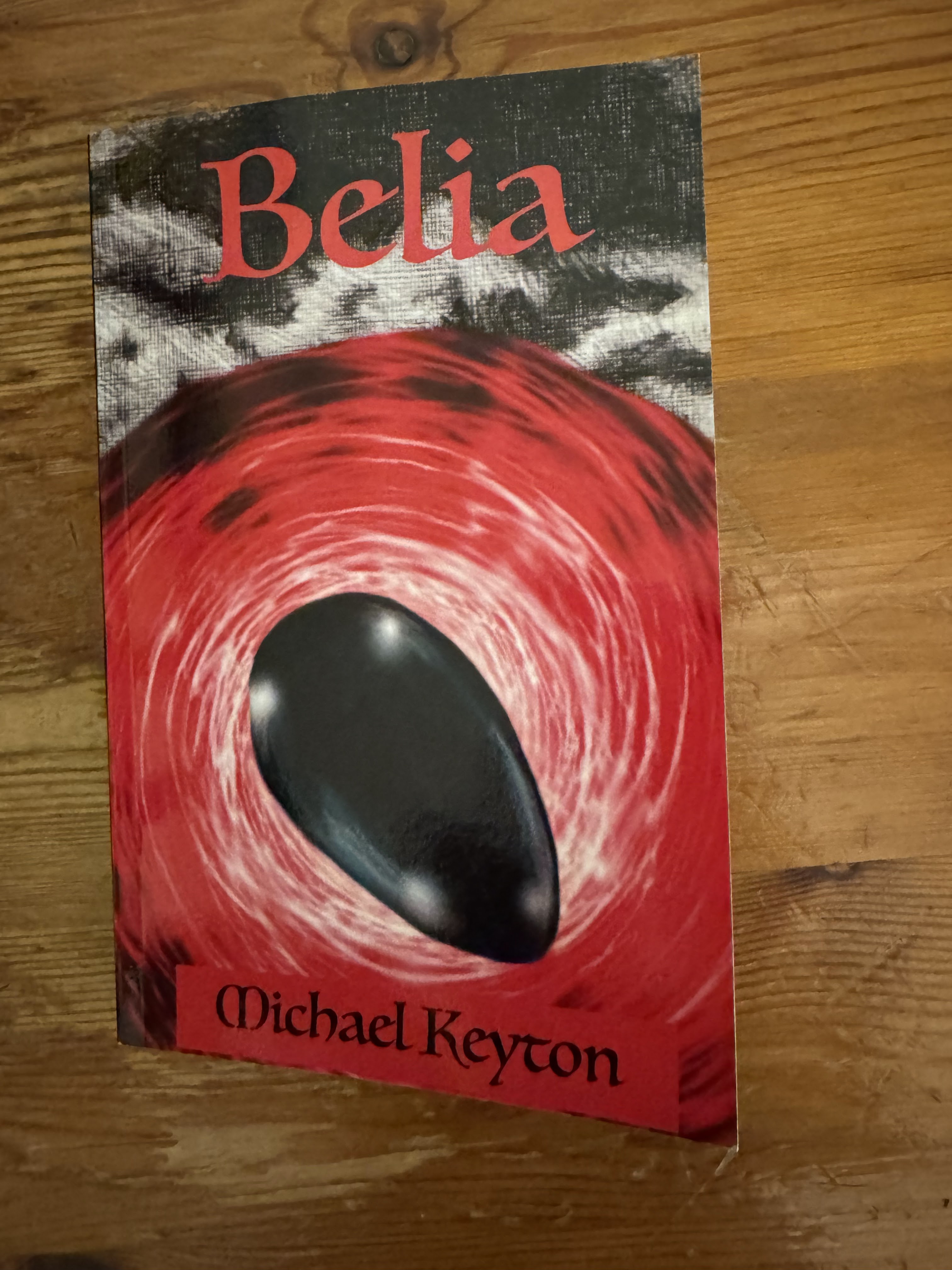
The cover beautifully evokes a dark and  sinister alternative Newport and one of those that haunt it.


cover by the brilliant Maria Zannini


And below is a short extract I hope you like.


Jane's daughter has just put on her red coat and gone out for milk. Jane is possessed by a profound sense of unease.


'Later she would call it presentiment, a sense of darkness, unseen but felt in her stomach. She found it suddenly difficult to breathe and leant into the window, focused on the street, on Janelle, a shining red star on a clear but cold winter’s night. 

All good. Normal. 

But it wasn’t all good. Something was ‘off.’ Jane shivered and closed her eyes. She would chase after Janelle now before it was too late. When she opened them again, Janelle had gone. In her place stood a man in a trenchcoat and old-fashioned hat. He carried an umbrella and was looking upwards, staring at her.

#

Dampness clung like snail juice, turning within minutes into a steady drizzle, soaking her through. Janelle spun around, the road at the edge of a darkening vision. She glimpsed houses passed every day but now fading or seeming to change shape.

 Drizzle turned into rain, and the air smelled sour, of mud and decay. This was ridiculous. Janelle tried to retreat—go home—laugh about it all with her mum over milk-less cocoa and a blazing fire. She found it impossible. Rain and a gathering wind forced her down the hill, in the distance, Newport a dingy smear of light that faded and then vanished.

The gloom around her deepened, the air somehow crooked; houses melted in shadow, blended into the rain and were lost. The road narrowed, no longer the road she had been running on. Janelle gasped, tried not to panic or scream for fear of alerting what she sensed but couldn’t yet see. She should have reached the shops by now, but she knew they weren’t there.  She ran along uncharted roads, the familiar swallowed by terror.

The rain gushed and twisted as though seeking to dissolve and consume, possessed of malevolent life. She raced through a tunnel of houses, the road now almost a river. Rain splattered her face like fat in a pan, and she ran, gasping for breath, eyes screwed against the hiss; the greyness a sheath that held her and prevented escape. She ran past trees that hadn’t been there before, leafless branches stretched in an endless, soundless scream.

The rain eased, its mysterious purpose achieved, and Janelle found herself in a world of mist and twisty streets and long ragged pools where once there had been cars.

It was a world of greyness, one that had depth and felt tangible, a cold, greasy smoke that settled and slowly embalmed her. Shapes that might have been houses closed in. The street narrowed into a lane. . . and alleyway . . . a flicker of black. 

 Janelle swivelled but there was no going back. The road had gone, replaced by an impenetrable wall of red brick. She turned to where the road wanted her to go and dug her hand into a side pocket. Her phone felt sticky and damp but mercifully worked. 

Janelle’s thumb scrolled for utilities, and she switched on the torch. A thin, hazy beam cut through the mist and picked out a man in a trenchcoat, dark felt hat and a black umbrella. He was still, appeared to be waiting, waiting for her.'


Friday, 28 March 2025

Roots and Brass Plates


The Liverpool bus stop near our house


A friend recently expressed surprise when I said I hated the idea of moving, re-locating, setting up house somewhere else. She pointed out how, over a long and happy life I’ve been to so many places, and I travel still though perhaps less adventurously when money allows.


In reality, a reluctance to move and a love of travel complement rather than contradict the other. Travelling is a joy (airports being the exception) when you have somewhere to come home to.  Re-locating on the other hand—except when you’re young—removes the powerful but largely unseen contentment that comes with having roots. 


In Liverpool, I was nurtured in a post war community with a family history rooted in the area. Leaving was initially exciting, moves to Swansea, Aberystwyth, Newport – and America, flitting from bedsit to bedsit, a Jackson Heights condominium, and then a lovely Edwardian house in Newport where, over a period of twenty years or so, new roots were established, to the extent I thought we would be there forever. 


Ribblesdale Avenue where I grew up (no cars then)


Manley road. Behind that top window, my first bed sit in Newport


Our family house in Newport


Two Newport views, the Civic Centre and the iconic Transporter Bridge


And now we’ve been in Monmouth for twenty years and new roots established.


                                                                      Monmouth in mist

But what do roots mean? It’s an easily understood metaphor until you try to explain it. 


For me it's walking into town down a country lane recognising faces, exchanging smiles and a greetings with strangers, because it comes so easily when people are happy and feel they’re in the right place. It’s recognising familiar patterns, the same couple walking the lane, the man with the distinctive fedora, the lady walking her three dogs, attending the same church, observing friends ageing slowly, attending funerals knowing others will attend yours. Above all knowing you’re immersed in goodwill. You may never need nor ask for help but there’s a powerful sense of it being there if or when needed.


Monmouth is pretty, but roots are independent of aesthetics. I enjoyed the same sense of ‘place’  in Liverpool and Newport where roots were inherited or developed.  Anthony Trollope understood roots. For him, every individual was indissolubly bound in an intense, self-perpetuating set of relationships. He expresses it most pithily in his wonderful A Small House in Allington, where every Sunday  ‘One walked over the brass plates of dead Dales in the village church.’ I shall start saving for my brass plate—assuming I don’t move again.


Friday, 14 February 2025

Belia


Yes, it is marketing time, which is much more difficult than writing and nowhere near as much fun, marginally better than toothache, especially for one as lazy as me.


Here goes.


Belia is a young adult novel and can be summed up in a sentence: an ex-highwayman and his daughter are cast into a demon haunted future, where they battle carnivorous moss, haunted forests, demons, and Belia—a witch out of time.


It is also a triple time-slip novel taking the reader from C18th Newport to the C21st and Newport in the far distant future. It also features the iconic Murenger pub, which plays a key part in events. Newport then enjoys a leading role and those fortunate to live there will recognise many landmarks both past and present—none though in that distant future, where the landscape is one of rolling hills and meadows.


For those who want more than a one sentence summary: …when in the winter of 1710, the highwayman Rafe Sadler steals an opal from a malignant woman of power, he is cast into the far future, an apparent ‘Golden Age,’ but one haunted by demons, and a dark secret acknowledged reluctantly and with pious guilt. This far future is a ‘paradise built on bones,’ the result of an engineered cull in a previously overpopulated and ravaged world—a world now threatened by demons.

Rafe’s daughter, Rosie, attempts to follow him but lands in twenty-first century Newport, where she meets a fellow time traveller—a refugee from that distant future. The three time periods play their part in the story as our heroes battle against carnivorous moss, demons, and Belia—a ‘witch’ out of time.


Though Belia is complete in itself, there is a sequel Tai-Lin which explores the same three time-periods, and takes us from an C18th America, a demon ravaged future, and the wilds of Tartary and Tibet. 

I hope you enjoy Belia, and Tai-Lin when it's released later this year..

Friday, 14 July 2023

Out Now!

 In all its glory


Buy here. Quick, before you change your mind.


It’s easier writing fiction than telling the truth, but as the devil knows, one blurs into the other with remarkable ease. A Liverpool Childhood came with three problems— apart from living it—most of them coming from the abundance of photographs: copyright issues, permissions and in some cases payment; formatting headaches, and above all the embarrassing cost of the paperback. The eBook is priced at £5, still cheaper than a London pint; it also gives me a decent royalty. Normally, the paperback would be in the region of £10. But times have changed. 

Paper and printing costs have gone up. The book has an abundance of photographs in high resolution which have added further to the cost. And so, the paperback is an unbelievable, £25, which in the UK gives me a 70p royalty and nothing at all in other parts of the world. I know which one makes more sense, and which I’d recommend, but for those who prefer a real book, I wince and apologise. 

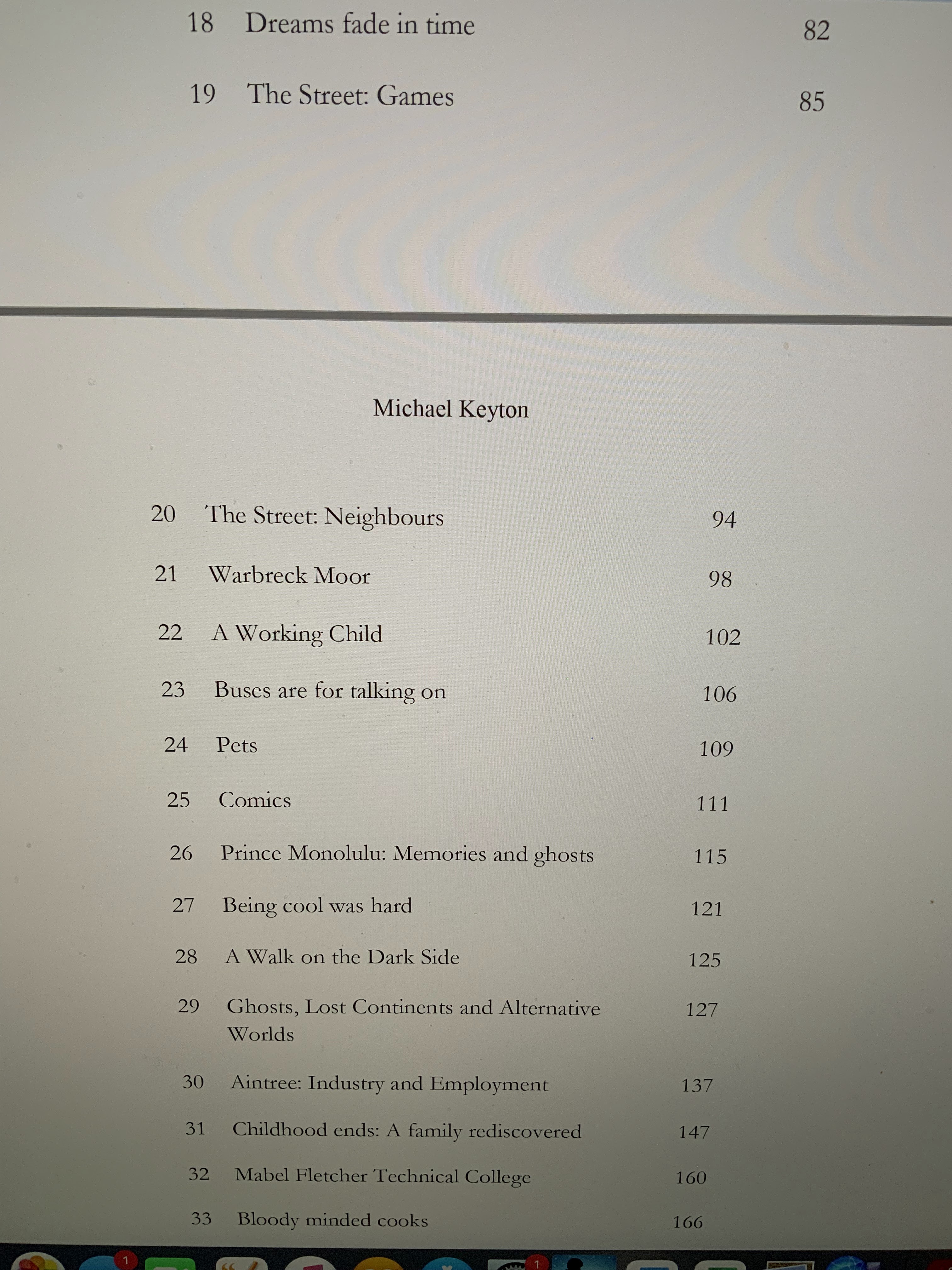
The contents shown below are interspersed with photos that didn’t make the final cut but are beauties in their own right. Many more photos in kindle and book.


Saturday, 31 October 2020

Devil's Elbow


To the left, Lol on squeeze box. Behind her Nigel who played a mean flute, Mike a guitarist, Henry in the blue shirt. Theo a lovely Dutch guy played with us in Irish sessions, and Reg capturing the dissolute cavalier vibe played bodhran and jug. To my shame the other two guys I've no idea. I'm taking the photo.


There are moments of intense happiness in most people’s lives. I have been more than fortunate in friends and events: University, my year in America, my marriage, seeing my children born. And the intensely enjoyable years I spent with the legendary Devil’s Elbow—well, we were big in Abertillery. Our Captain Pugwash hornpipe going down a storm: headbanging and much stamping of feet.


So, with that in mind, I need to put on the record my gratitude to two old friends and founding members, Henry and Lol Lutman. Both from Yorkshire, they enjoyed the Viking propensity to grasp chance by the neck and go where the tide took them and the band. (My scouse propensity is grasping metaphors by the neck) So, in short, they brought joy to my life, and for that I’m grateful.


From small beginnings, as they say: a priest loosely attached to the school heard that a Welsh dancing troupe were in need of musicians. Now, I was not a musician, though I owned a second-hand fiddle bought in a Swansea junk shop for 7 shillings and sixpence. But I was able to pick up a tune very quickly and then later discovered I was better on mandolin. The Welsh dance group—Gwerinwyr Gwent—were the nicest bunch of people you could possibly meet, which was just as well because even the musicians had to dress up, in my case waistcoat, short breeches and long socks. I drew the line at the tall hat and skirt. It was also very good, coming second in the Welsh National Eisteddfod, Henry, Lol and me accompanying them—me the imposter—scared out of my wits and staring at sky when I didn’t have my eyes tightly shut.


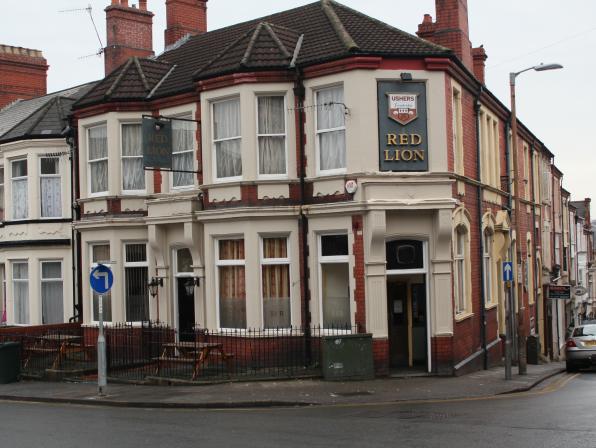
The Red Lion

We left the dance group eventually, and over a drink in the Red lion on Stow Hill, Henry and Lol told me they were forming a ceilidh band and would I like to join.

Never say no, however bad you are. I said yes. 

And from there Devil’s Elbow was formed, various other band members (mostly guitarists) coming and going over the years.


Self-belief and hard practise work wonders. Weekly rehearsals and much laughter punctuated by increasing bookings on the Ceilidh circuit and then folk clubs. And it was hard practise, the key to muscle memory that allows you to play when you’ve drunk one too many. I still have the cassettes, one with us playing the damn ‘Atholl Highlanders’ ten or twelve times until it was sufficiently tight. And I still have the muscle memory, fingers and mind on automatic even after all these years. 


This was originally 'OReillys,' a magical Irish pub that had 'lock-ins' (much better than lockdowns) on a Sunday afternoon. The guinnnes was free for as long as we played


And so, the wheel turns full circle and the joy continues when my daughter a gifted violinist, and a Valkyrie on ‘fiddle,’  comes home from London. She reads music fluently, but possesses the greater gift of being able to play by ear—and the even greater gift of playing Devil’s Elbow


I hope the sound is okay, it comes from an old demo tape/radio interview. As I remember the format was usually one or two instruments playing the opening few bars and the rest of the band coming in as and when. I played the Octave Mandola pictured above. It sounds like a woody banjo bubbling between the violin and guitar - and believe me it's the devil's own job keeping up with a fiddle. I also play mandolin somewhere or other


Friday, 14 August 2020

A life in twelve pictures


I’ll likely die baffled, but I’ve learnt a few things along the way:

Accept what you were

Accept what you are

Accept what you’ll be

And be grateful.

Enjoy life.


Baffled from an early age but pugnacious


First Communion


Here, most definitely grumpy. I’d convinced myself I was

wearing girls’ sandals. Probably was.


Here, the bleak visionary


Father Hill Junior High School for Boys


My first job. An iconic school and an iconic community.

It was a strange twist of fate that changed my life. I ‘failed’ the interview and the job went to a young lady who realised she other priorities, a baby was on the way.  A short and courteous phone call and I was on my way. So much fell into place after that. Every so often I think of that baby and thank him or her.


“I was so much older then, I’m younger than that now…”


My first Form. Their characters shine through. Some are unfortunately dead. Others will surely end up as grand old men terrorising nursing homes.


Seattle airport. Christmas 1981. Meeting Kathleen, my distant American cousin, for the first time. We’d only seen each other for a minute or two and already she was mocking me – pushing her imaginary glasses up her nose – a mannerism I didn’t know I had.


How I got to America, you can read here and here


Taking pictures of America. Camera white hot.


Swimming in the North Pacific on New Year’s Day – as one does.


Somewhere in New Mexico. Travelling America took its toll.


But America liberated me.  I came back with a new name and a new smile. It didn’t last long


Somewhere between 'Dark Fire' my ‘dirty’ book, published by Red Sage and my second book,
 Clay Cross.


Still trucking


Playing silly buggers with trees


Age gets us all. Time to grow a beard.


(OK Pedants, 14 pictures)


Saturday, 8 April 2017

When I breathed I clinked

How I drifted into teaching, how I stuck with it for thirty years, still remains a bit of a mystery. Perhaps I just liked teaching history – working with young silly buggers, and on bad days—inertia, the feeling that there wasn’t anything else I really wanted to do.
Marking a register for the first time was an exercise in poetry. Names like Giovanni Ambroselli… Bruno Romola, Rudolpho Velluchi, Mauro Zannotti  rolled off the tongue like incantations, putting me in a good mood for the rest of the day.
Father Hills was a nice entry into teaching and I taught some remarkable boys who’ve gone on to do great things. Things became more challenging when, a year later, we all decamped to the spanking new school adjacent to Tredegar House. The spanking new soon becomes old and it was knocked down some thirty years later.


When I got there I found I’d been given the wildest Form in the school - ‘to break me in’ - an elderly teacher told me in a mournful voice . . . 
It was Christmas, the last day of term. The weather was wintry, the schoolyard crusted in a thin skin of snow. I was on break duty, looking forward to the holiday starting in two hours, twenty-one minutes, and ten seconds time. A member of my Form came up to me. ‘Merry Christmas, sir,’ he said. He thrust a small bottle of whisky at me. My spirits rose. Just Two hours, eighteen minutes and twenty-one seconds to go— and a bottle of whisky!
In the next ten minutes my spirits rose still further as one by one the boys in my Form came up to me, each offering me various alcoholic drinks, each wishing me a Merry Christmas. Teaching wasn’t so bad I decided.
The bell went and we trooped into the final assembly of the year. The hall was freezing, the central heating having been switched off in readiness for the holiday ahead. I stood there in my woollen greatcoat, its many pockets bulging with bottles. When I breathed, I clinked.
My Form was positioned as usual in the front row - staring up at the stage with their usual intentness. In my first week, I’d assumed they were just keen, inspired perhaps by Mr Witherington’s various homilies. In my second week, as I came to know the Head and my Form, I realised this couldn’t be so. In my third week, I discovered the truth. My Form had a sweepstake on how many times Mr Witherington rocked on his feet as he spoke. Real money changed hands. (An interesting side bet was how many times he said ‘umm’ between words.)
But on this occasion the Head had something serious to say and my heart sank. Boys had brought drink into the school. A boy had been caught sick in the caretaker’s cupboard. Everyone— he stared at my Form in particular— would be searched.
The staff swung away from the walls with the same menacing smiles I remembered from when I was a schoolboy. I tried to ensure they wouldn’t be directed at me and so walked very carefully, aware of every tiny clink. I felt like the Tin Man. My Form stood up, impassive, obedient, their gaze fixed intently on the Head’s shoes.
 I patted them down, avoiding their eyes, aware of the smirking behind blank faces. No matter, just over an hour to go.
No drink was found, and I returned to the wall, contemplating an unexpectedly rich and exciting Christmas. The Lord works in mysterious ways. As I walked to the bus stop there was movement behind me, a furtive touch on the shoulder. I turned.
“Can we have our bottles back, sir?”
The optimism of youth.
"What bottles?"  I said

Friday, 26 June 2015

Everything Goes!

It's a salutary thought when you realize you know more people who are  dead than those living and breathing. (Though FB friends may skew the figures a little). But what also marks the passage of time are familiar buildings demolished almost as quick as you pass them. Time is totalitarian, erasing history in dust. 

Below is Father Hill Junior boys. (I'm the extra from Woodstock) I was there a year, and then Pow, it was gone!

 An earlier blog post marked the demolition of my next school, St. Josephs. No sooner had I left it, then pow it was gone. I like to think it was some superhuman quality on my part, but I fear not.

Now another landmark has gone. St.Bonaventure's Secondary Modern School. Fair enough, it had undergone a name change some years after I'd gone, but knocking it down…I'm sorry, but that was a step too far. The pictures below show some of my old school friends when I was there.
They are holding my project on Greece and Rome. My first book, you might say. I enjoyed drawing the bronzed and heroic figures - everything I wasn't. 
Above is the school uniform. Below is the reality

 Everything else, in melancholy colour, gives a blow by blow account of its demise. I shall raise a glass to St. Bonnies, tonight: the school that made me the man I am today….hmm, maybe first I'll assess the man I am today...and toast that too :)
Nothing if not thorough - the Demolition Plan.

The school awaiting its fate.


Munching away

Corridors we once ran along when teachers weren't watching.


If you look carefully below you can just see the remaining flight of stairs. A snack for the 'Muncher'


Almost Gone


Gone!


Just goes to show, you should never take things too seriously