Friday, 12 February 2021

Little Doward: The magic of light

I have no pictures to show of the walk up to the top of Little Doward. It’s a matter of a head-bowing trudge with the added burden of numerous false summits ie just when you think you’re approaching the top another summit emerges. The thought occurs that had I been part of a bronze age attack force I’d have given up before reaching the hill fort that crowns it. Another thought comes with it. If this is Little Doward you can forget its big brother. 


There was one useful and unexpected spin-off arising from the head-bowing trudge. Halfway up, we hit the ‘elephant’s graveyard’ of sweet chestnuts. There were hundreds and hundreds of them, shells opened just waiting to be picked. Two things stopped us. We’d stumbled upon them too late, most of them spoiled. The other thing was we had no bags to carry them, and would we want to carry them up the various hills. But next year. At the right time. We’ll be there, perhaps hiring some Sherpas. 


Sweet chestnuts nice. 


Horse chestnuts not so nice. Note the difference in casings. 


But at the top you step on to pure magic, an unspoilt terrain unchanged from the C18th and a sense of what that Bronze Age hill fort controlled. 


The viewing spot. 


Two to three thousand years ago this would have been surrounded by a stockade. The tree line indicates where.


The land that time forgot


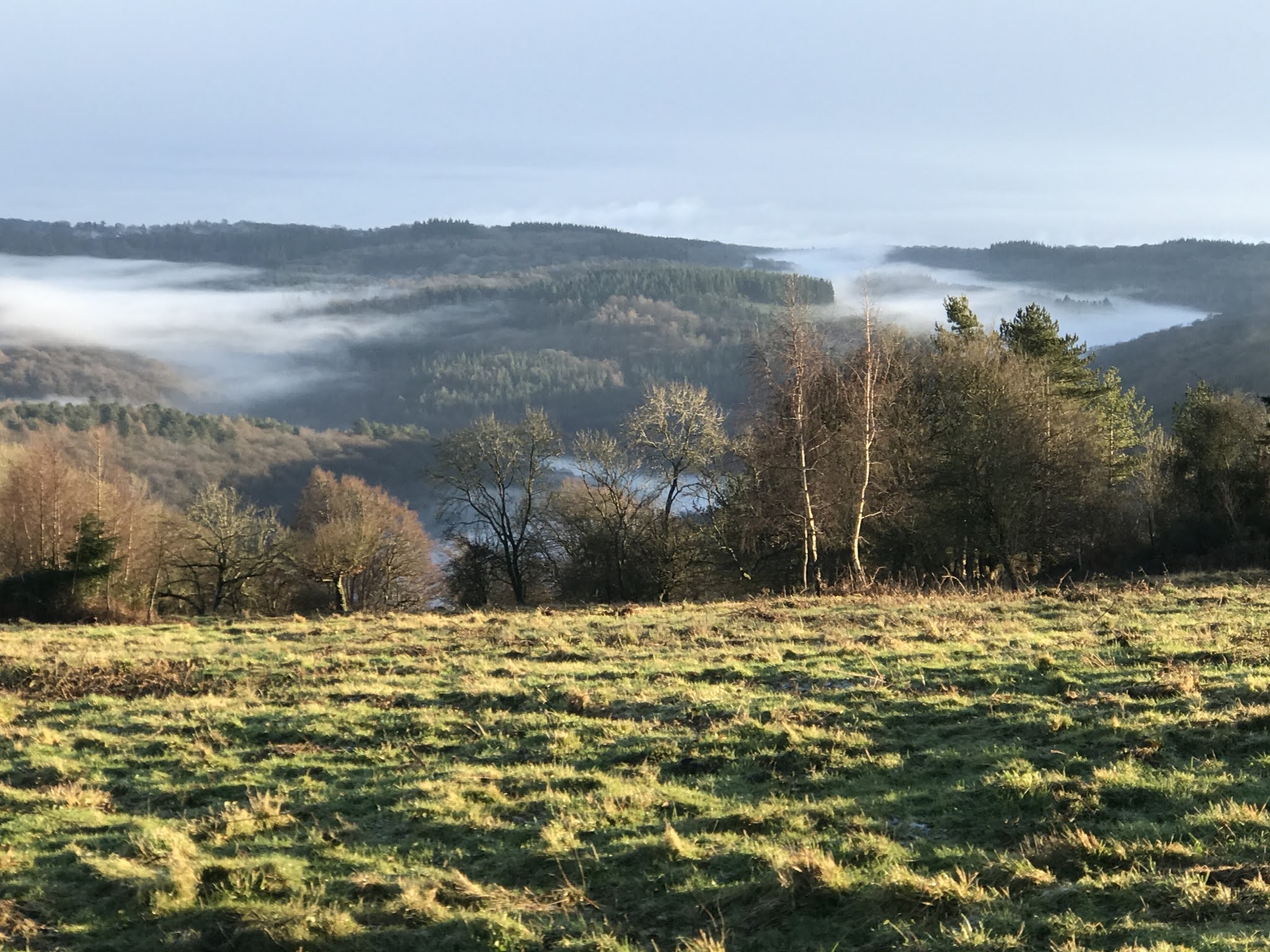
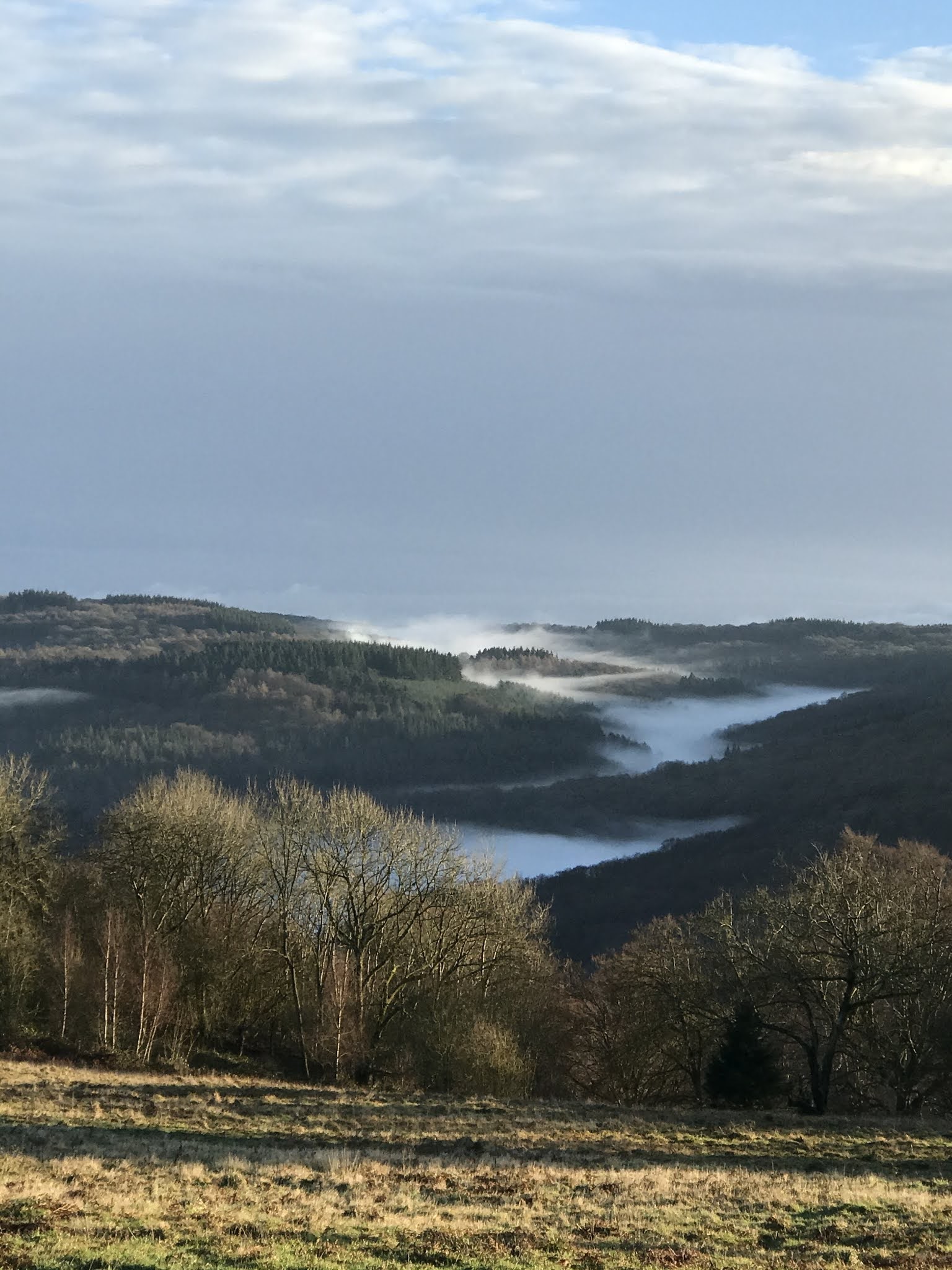
Not lakes, but mist


Mist and silhouettes as we walk down hill


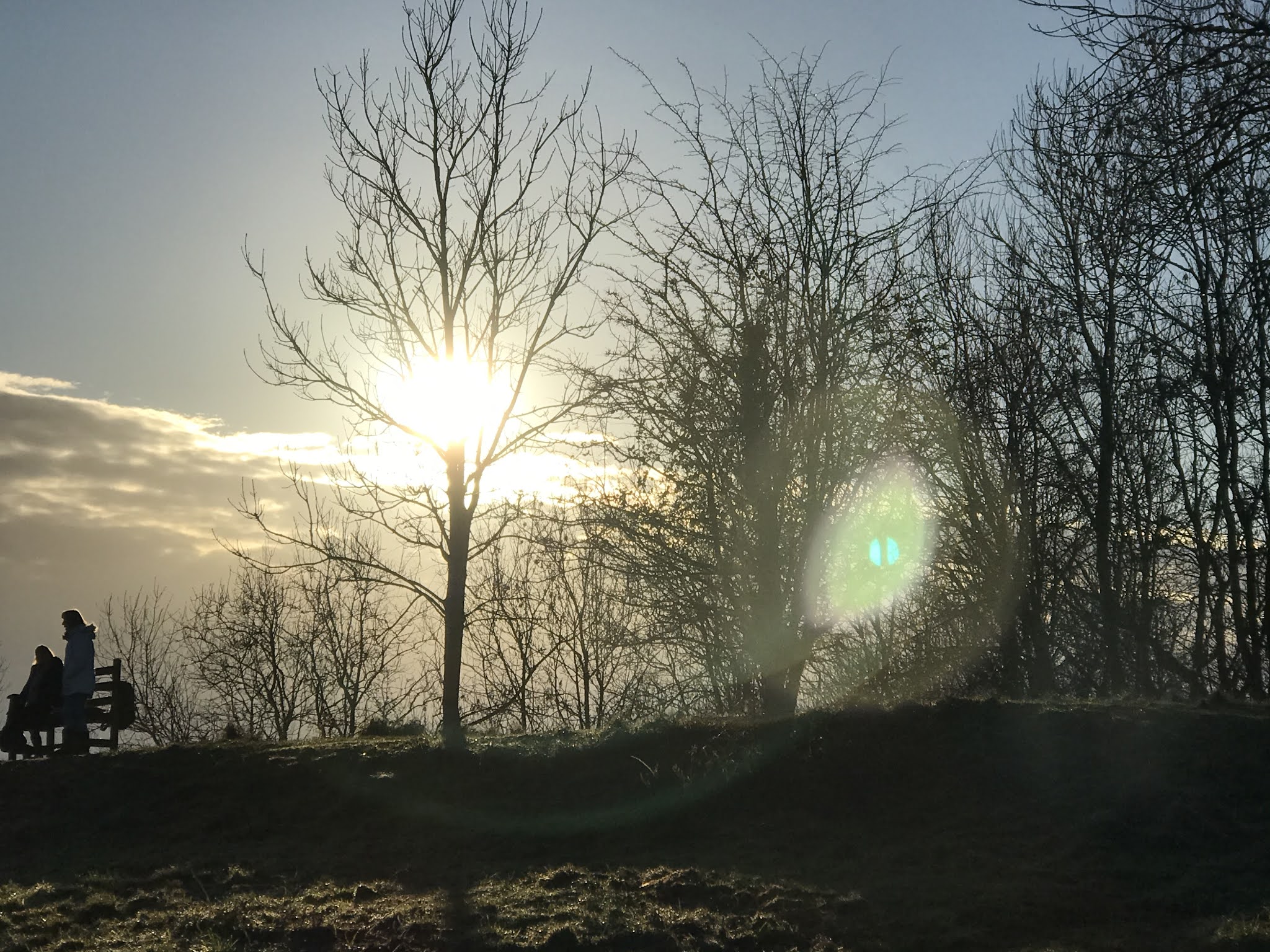
Trees in a fierce winter sun


Light on wood


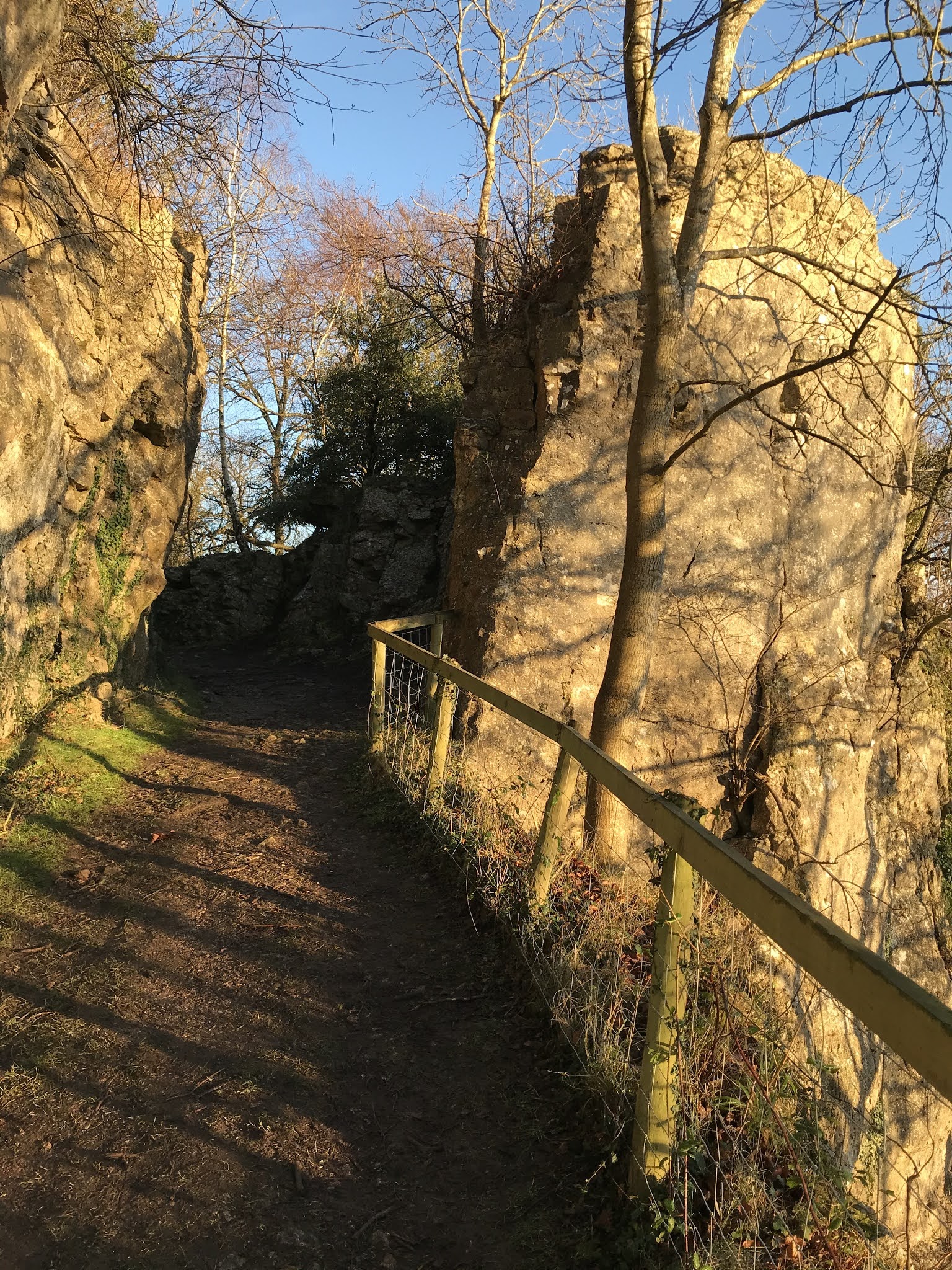
Before entering the forest you pass through a gorge that resembles a gatehouse.


Mist and magic


Caves


Putting your best foot forward

Grasping on for dear life


And now we face another walk up a very steep hill. I feel like that beetle. 


Friday, 5 February 2021

Lord of the Lies


More Sketches of Evan

In the old Blake manor house on the west coast of Ireland, W B Yeats was reciting a poem to a small but rapt audience. The recital took place in the long library panelled from shipwrecks and pungent from peat smoke from a flickering fire.  Suddenly a door next to the fire unexpectedly opened to reveal an empty passage. Yeats waved an elegant hand, interrupting his poem with ‘Leave it alone. It will go away as it came’ continuing his recital without missing a beat. 


Evan Morgan was one of the guests and was thrilled to hear about a reputedly haunted room in the house, bare of furniture because of poltergeist activity and kept permanently locked. Having just been received into the Church of Rome and in possession of a relic, he told all there that deliverance was at hand. He would exorcise the room. Within moments the room filled with a thick mist and Evan was forced to the ground, writhing and rubbing his eyes. When he came to, Evan described the ghost of a pale faced boy with large luminous eyes, dressed in brown who was strangling himself. In Evan’s words, “I went down into the private hell of that poor boy! I have never known such mental agony! Hand me my Catullus, I won’t be coming down to dinner.” An anti-climactic closing sentence perhaps. 


Yeats and his mediumistic wife held a séance in the room and confirmed Evan’s vision when she ‘conjured’ up a pale red-haired boy of about fourteen and learnt that he was a past member of the Blake family. Records show that an Ethelred Henry Blake died aged fourteen 1824-1838.*


The story is recounted in William Cross’s latest book on Evan Morgan, and I’m grateful for that story alone. The book is alive with similar anecdotes, in fact it’s the purpose of the book, which is packed with stunningly evocative photos and accounts of Evan from those who fed on his profligacy. His house parties were legendary, and the estate was largely bankrupt when he died in 1949 aged fifty-five.


                                 Rafaelle, Duchess of Leinster. Brooklyn girl done good,


Luisa, Marchesa Casati Stampa di Soncino 1881 - 1957 Italian heiress soul mate of Evan. She lived in a world of Belladonna and opium, wore leopard skin dresses, cradled exotic snakes and lead a live leopard on the leash: 'More a work of art than a human being.' 

A short life but packed with incident, and William Cross, the indefatigable truffle hound of aristocratic minutiae has a rich seam to mine from gossip, diaries and letters recording encounters with the flawed but deeply generous Evan Morgan:   

‘The most extraordinary house I have ever stayed at . . . belonged to Lord Tredegar, down in South Wales. He was a papal count of some sort and lived surrounded exclusively by Great Danes and handsome men-servants . . .He really was an extraordinary fellow with altars all over the house and somewhat terrifying interest in black magic’ John, Duke of Bedford


‘Evan was a showman, whether as a papal chamberlain wearing gorgeous robes in Westminster Cathedral or ordering drinks all round in an East End pub if he was in a good mood. His moods, however, swung dramatically, especially after he had enjoyed sex-and-whipping sessions (with soldiers and sailors he’d picked up) after which he had to have his period of sackcloth and ashes before a bloodied crucifix.’ Robyn Bryans ‘The Dust Has Never Settled’ Honeyford Press 1992


Charles Carnegie, Earl of Southesk with his only son, James, later Duke of Fife


‘Evan loved to tell a story about Julian Huxley falling in love and telling his wife that he was going away with the woman. He had arranged to meet her at the Café Royal – but had lain down for a nap in his study, removing his false teeth. His wife tiptoed in and took them and buried them in the garden. And that was the end, not of the marriage, but the romance.’


Julian Huxley as a houseguest of Evan was embroiled in conversation with his host when a footman rushed in to tell him that a pet baboon had escaped and gone wild. “Evan merely said to me: ‘You know about animals, come along,’ picked up a torch, and off we went. The baboon was certainly alarming, snarling and showing its teeth. But we coaxed it into a corner and Evan caressed it until it calmed down. And so, we returned, the baboon in excited nakedness, perching on Evan’s dinner-jacketed shoulder and contentedly munching a carnation it had snatched from his button-hole.”


Maybe, in a hundred years’ time, a similarly lavishly produced book will recount the activities of current half-dressed celebs, but none will possess the enigmatic quality of the black and white photographs that seem to capture the soul of those portrayed.


Sir John Phillips - eccentric Welsh family with two castles in Pembrokshire and a lot of land. And still he looks shifty.

Myrtle Farquharson of Invercauld 1897 - 1941 'Beautiful, clever, vivacious. Killed in the London Blitz.


The book is a must for the ‘completist’ and an excellent ‘dip into’ for those fascinated by the seedy glamour of a past world**


*The house was burned down by the IRA and rebuilt as a hotel. The haunted room is currently a bathroom. 

** Rich in sources and footnotes. Those addicted to google will be led down a rabbit hole leading to a maze you might never escape from. The book may be slim. The exploration is endless.


Friday, 29 January 2021

Lamas of the Western Heavens. III

Huc and Gabot were fascinated by Tibetan women who, before leaving the house, daubed their faces with a kind of black sticky varnish to make themselves look ugly. Huc took on board the Tibetan explanation that it originated from an ancient decree during a period when licentious women were prone to corrupting the morals of lamas; he did however question why women put up with it. 


He was equally fascinated by the Tibetan greeting, which involved taking off your hat and simultaneously putting out your tongue and scratching your ear. Perhaps more repelled than fascinated, Huc also describes how the Tibetans disposed of their dead. Amongst more conventional methods, bodies were left to rot or be eaten on mountain sides, and perhaps most bizarre of all, quartered and given to dogs. Some temples bred dogs especially for that purpose. I’m not too sure I’d be happy sleeping there, though the snoring might put them off.


Despite their Christian prejudices, both missionaries soon grew to love the Tibetans and bear witness to the tolerance and open-mindedness of those they met. They also record the profound distrust of the Tibetan for the Chinese. 


For China, Tibet was strategically placed, a valuable ‘listening post’ to the outside world. For Tibet, China was a threat and kept at arms-length. Relations weren’t helped by Chinese arrogance. Chinese residents, for example, were perfectly happy to take Tibetan wives, but abandoned them and their daughters when returning to China. Their sons they took with them. Huc and Gabot had another reason to dislike the Chinese. When the Imperial Court heard of two French missionaries preaching in Tibet, pressure was brought to bear and, with great reluctance on their host’s part, they were forced to leave and return home. 


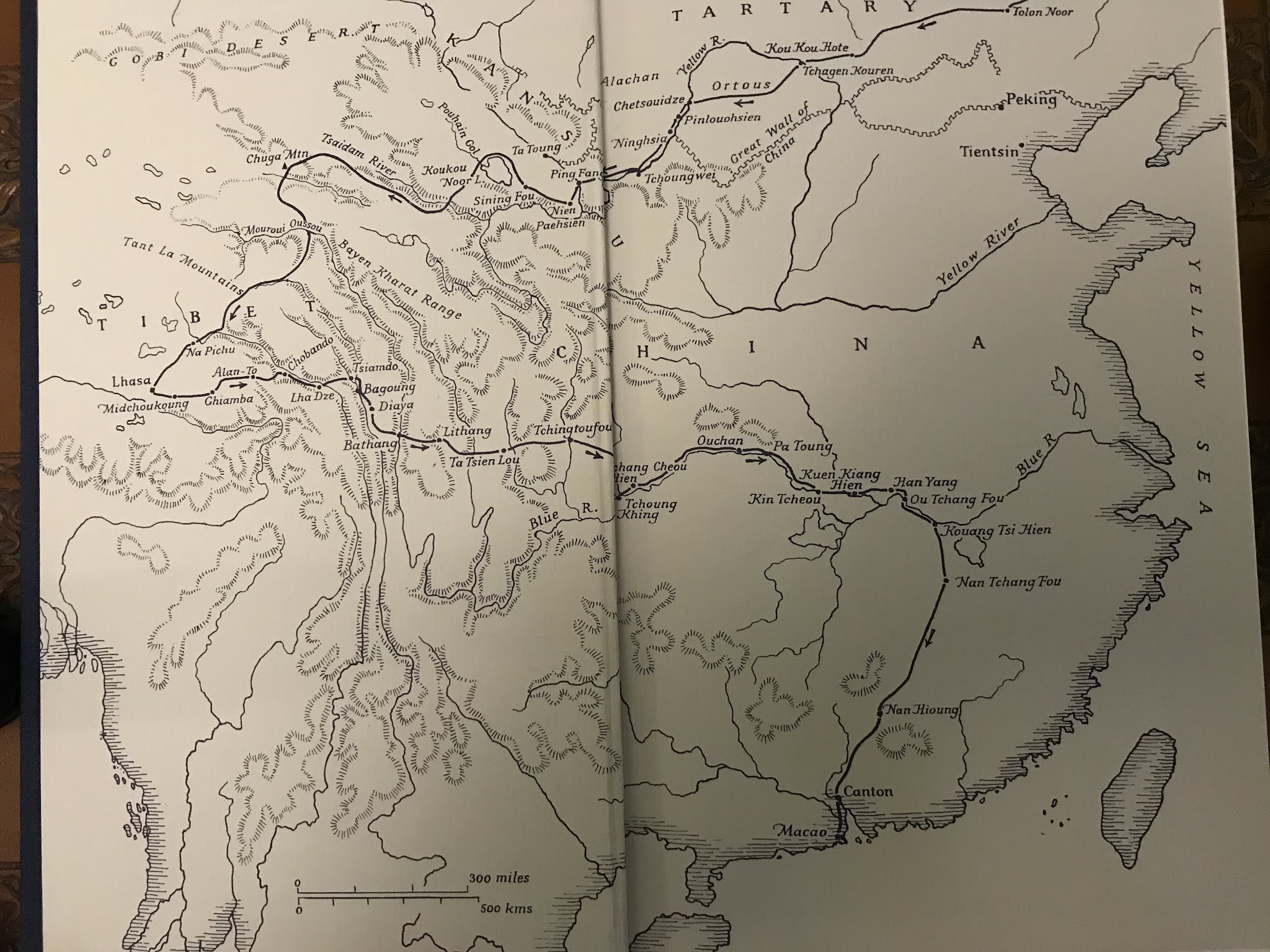
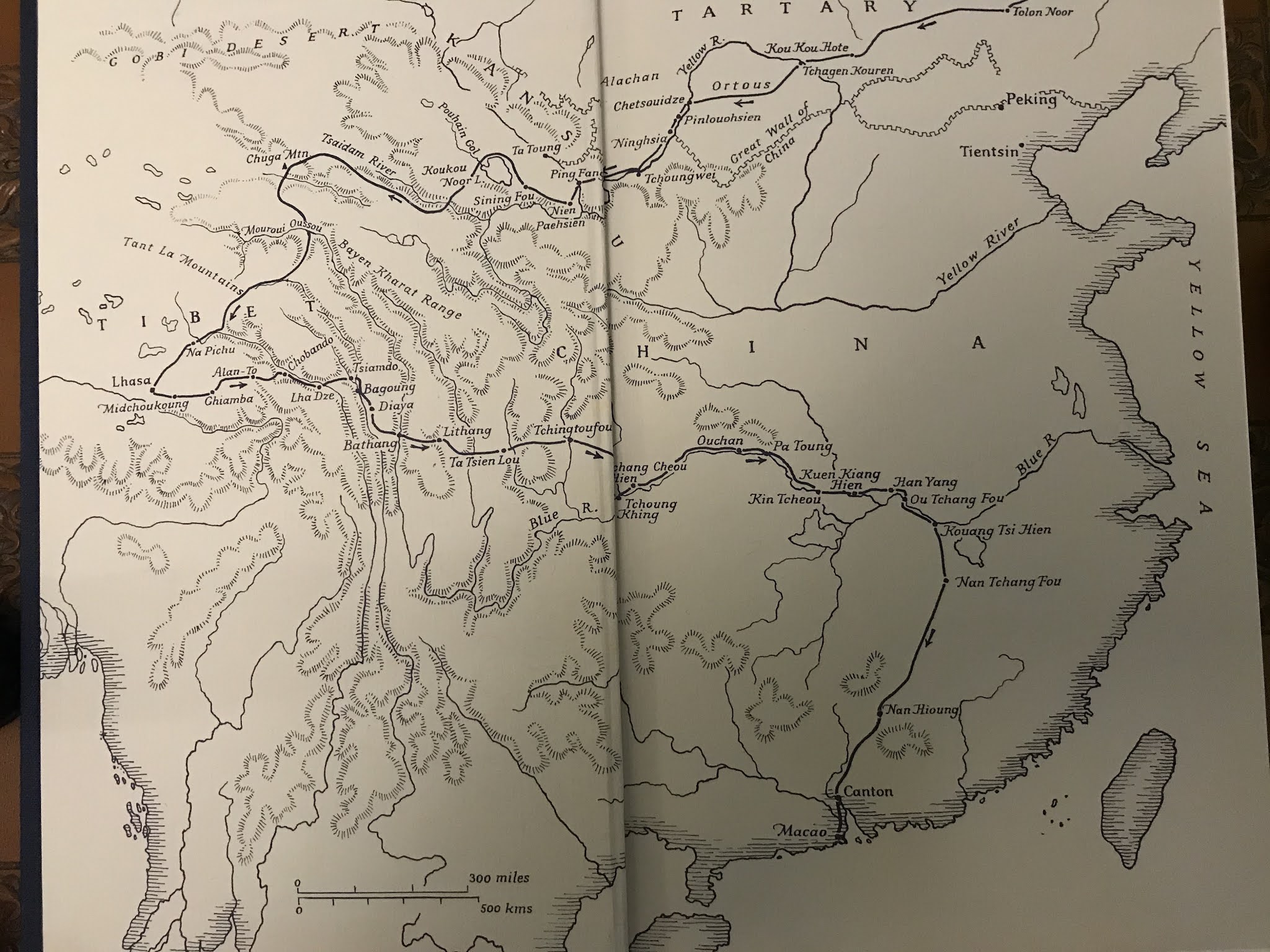
Leaving Lhasa they entered Midchoukoung, a wild, rough country. ‘For five days we travelled through a maze of valleys, twisting to right and left, sometimes retracing out steps to avoid chasms or skirt impassable mountains.’ (see map below)


They navigated their way across mountains and ravines and on one occasion a precipitous glacier that demanded a profound sense of fun, trust in God and nerves of steel. In Huc’s words: 


A magnificent yak was the first to go. He stepped forward to the edge of the plateau, stretched out his neck, sniffed the ice for a second, and blew steam in thick puffs through his wide nostrils. Then he bravely placed both forefeet on the glacier and shot off immediately as if propelled by a spring. He held his legs wide apart as he went down, but kept them still as if he had been made of marble. When he got to the bottom, he somersaulted, but ran off grunting and leaping across the snowfields.” When all the yaks were down, the men followed, sliding down on their bums and using their whips as rudders; in Huc’s words, faster than ‘steam trains.’  


And if it wasn’t glaciers it was hair-raising bridges:

‘At just over a mile from Ghiamba we crossed a wide rushing stream by a bridge made of six great fir trunks which were un-planed and so badly fastened together that they rolled under one’s feet’ 


Huc becomes quite an authority on neck-breaking bridges: 

'Chain bridges are quite common. To build them, they first fix on the bank as many iron clamps as there are to be chains; over the chains they put planks which they sometimes cover with a layer of earth. These bridges are extremely elastic—they are always provided with hand-rails.’  Hand-rails, well, praise be! For me, a person that’s afraid of heights, the illustrations are bad enough—visualising the terrible consequences of a misstep even worse


Ironically, the most terrifying part of their journey was what their Tibetan guides called flat land. That’s the good news. The ‘flat land’ was a ledge little more than a foot wide and with a precipitous drop to one side. The illustration and verbal description says it all:


‘We had to follow these defiles at a great height along a ledge so narrow that the horses had only just room to put down their hooves. As soon as we saw the yaks start off on this appalling path and heard the muffled roar of the waters far below, we lost our nerve and dismounted. But everyone immediately shouted at us to remount: the horses were used to it, they said, and would be more surefooted than we . . .We offered a prayer and set off after the others. We soon realised we could not have kept our footing for long on the evil slippery ground. We had the sensation of that an invincible force was dragging us down into fathomless depths below. For fear of becoming giddy we kept our faces towards the cliff, which was sometimes so sheer that there was no ledge at all for the horses feet: when that happened there were tree trunks for the horses to pass over, laid on  to stakes driven horizontally into the mountain. The very sight of these terrifying bridges made us come out into a cold sweat all over. Yet there was nothing to do but go ahead. After two whole days of being permanently suspended between life and death, we at last left this path.


And, thirty-six days after leaving Lhasa and covering 875 miles across mountains and defiles and gorges, they’d only succeeded in reaching Tsiamado It’s worth checking the map to see how far yet they had to go. 


By the time they reached the Chinese frontier town of Ta Tsien Lou (Arrow Forge) in June 1846, they had been travelling for three months and had covered 1760 miles. From there, the journey to Macao was more straightforward but, as always, there’s a fly in the ointment:

'As we approached the Chinese frontier, the natives were less proud and less rough; they were just a little greedy, over polite and cunning.' They really didn't like the Chinese. Bless.


Postscript.

Having done all the groundwork both men hoped to found a permanent mission in Lhasa. Their hopes were dashed by the Vatican bureaucracy who gave the position to another missionary order. Gabot set off to appeal, but to no effect. The same Vatican bureaucracy packed him off to Brazil where he died of yellow fever in 1853.

Huc died more leisurely. His book achieved some success and he was sent to Peking  on another mission, but on the way,  his health broke down and he returned to France. He died in 1860 aged forty-seven never having recovered from his stupendous mission to Lhasa.



Friday, 22 January 2021

Lamas of the Western Heavens Part 2

“Brother, are you at peace?”

The Houng Mao Eul turned quickly round and shouted at the top of his voice: “You tortoise egg, what is it to you whether I at war or at peace. What right have you to call brother, a man who has never seen you before?” 

This exchange took place at the town of Tang Keou Eul with particularly barbarous inhabitants. 

The Houng Mao Eul, as described by Huc had black greasy hair hanging down to their shoulders and covering much of their face. They carried broad sabres hilts embedded with jewels. The more prosperous wore robes edged with tiger skin, and they spoke in short, rasping sentences ‘vaguely metallic.’ It must have been an unsettling start to their journey:

‘The town appears a den of brigands. Everyone is dishevelled and untidily dressed. The entire population shouts, jostles, fights and often blood flows. In the depths of winter – and this land is extremely cold – arms and legs remain bare. To dress sensibly was seen as a  sign of cowardice. 


They journeyed on to Kounboum and, to them, the equally weird Amdo who had a thing about butter. 

The Amdo at least were more peaceful. Every year, incredibly detailed works of art were sculpted from butter. These were on a vast scale and depicted in minute detail texture, fur, fabric even races—Africans—heard of but not seen. Temples competed with each other and people wandered from one to another in judgement. Finally, the Grand Lama of Kounboum inspected each one, space made for him by attendant lamas carrying long black whips. To Huc, he looked glum and bored out of his mind. 


And then, what everyone had been waiting for, the great butter statues and friezes were demolished and thrown down ravines for ravens to feed on while the inhabitants of Kounboum got riotously drunk. Bit like Christmas with butter. And like Christmas, it came around every year, with ever new and ambitious friezes and sculptures carved and finessed from butter and then discarded.


The two missionaries rested awhile near the Blue Sea surrounded by plains of tall grass, Mongolian herders and Brigands. It was because of the latter they were persuaded to wait for the return of the Tibetan Ambassador enroute to Lhasa from Peking. The Ambassadorial train was spectacular to say the least, with its 15,00 yaks, 1,200 horses, as many camels, and 2000 men. The ambassador himself—the Tchanak Kampo— resting on a large litter carried by mules. An escort of 300 Chinese soldiers and 200 Tartar warriors protected both him and the caravan.


Americans often talk of the Oregon Trail and stories of the Donner Pass. This journey had its dangers, too. Crossing the mountains of Bourhan Bota saw them struggling against poisoned gases—Carbonic acid gas being heavier than air settled at ground level poisoning animals and men and making it almost impossible to light fires. 


At the base of Mount Chuga they were caught by prolonged and ferocious blizzards, and in the white-out (even with 1500 yaks) it proved almost impossible to locate enough dung to make fire.

Conditions became even more terrible in what Huc termed the ‘death wilderness’ beneath the great chain of mountains—the Bayen Kharat—between the Blue and Yellow rivers. He describes how, from a distance, they saw a series of dark lumps in a frozen river. These, it transpired, were fifty wild ox frozen in transparent ice, their legs caught in the motion of swimming.


As conditions worsened, Huc describes how the ox and yaks were forced to walk bow-legged because their long haired stomachs turned into long and heavy stalactites.


And if it wasn’t ice, it was fire where he first appreciated the irredeemable stupidity of camels:


"A moment of carelessness saw the caravan menaced by a fast-moving grass fire. Whilst the rest of the camp saw to the yak and horses, the two missionaries focused on rescuing their four precious camels:

‘…we pushed and beat those silly camels to try to force them to run, but in vain. They stood still, turning their heads around coolly, as if asking us what right we had to come and stop them from grazing. We could have killed them! The flames ate up the grass at such speed that it soon reached the camels. Their long thick coats caught fire, and we had to run at them with rugs to put out the flames. We were able to save three."


It must have been a relief when from a high mountain peak and after eighteen months of travelling,  they spied Lhasa on the 29th of January, 1846.


A momentous journey and worse yet to come; a tribute to daring and courage. However within days of reaching their goal their reaction was predictable, perhaps disappointing, but then they weren't 'New Age Hippies' looking to find themselves. Only certainty had got them through this far. Writing of Lassa, 

 Huc wrote how the houses were whitewashed and pretty from a distance, but smoky and smelly inside, ‘whited sepulchres like all false and pagan religions.’


 For those wishing to trace their route again eg Mount Chugu - the map is below.


Friday, 15 January 2021

Lamas of the Western Heavens

In March 1844, Christ failed to return and herald the end of the world, a profound disappointment to William Miller of Massachusetts, who’d predicted it. 

On May 24th of that year Samuel Morse made the world a little smaller by tapping out ‘What hath God wrought’ – the world’s first telegram.


Lamas of the Western Heavens

And in August 1844, two young French Catholic missionaries set out on a remarkable journey. Dressed as lamas, they started 400 miles from Peking and travelled southwest, trekking across Inner Mongolia to the foot of the Tibetan mountains. There they joined the caravan of a Tibetan ambassador returning to Lhasa from Peking. 


Some of the place names have changed but if you want to trace their journey from your armchair via google, you'll see what an awesome journey it was.


A Lama of Kounboum in yellow mitre and red robes

In Lhasa they were befriended by the regent of the child Dalai Lama and allowed to set up a chapel and preach. They were expelled 46 days later when the Chinese authorities got wind of them and escorted out, travelling through Eastern Tibet and South China to the port of Macao: their adventure thus ending in October 1846.


Ki-Chan, the Chinese ambassador to Lassa 

The two French missionaries were Joseph Gabet and Regis-Everiste Huc.


 Huc wrote two volumes describing their adventures in meticulous detail and this in turn has been condensed into ‘The Lamas of the Western Heavens’ which I thoroughly recommend. It’s a far cry from the wearisome ‘travel program’ freebies given to fading celebrities, a reminder that there was once, and not so long ago, a mysterious and adventurous world.


Huc writes about everything he encounters some of which resonate with and explain current attitudes and events.


“The Mohammedans or Houi Houi are very numerous in China. They say that they first in the Tang dynasty AD618 – 907. They were received by the emperor . . . and benevolently welcomed. The emperor, 

struck by the beauty of their appearance, heaped them with favours and invited them to settle in the empire. It is said there were only two hundred of them to begin with, but they have so multiplied that today they are a numerous race feared by the Chinese. …There are even some places where they are in a majority over the Chinese. . . They have a certain force of character which is rarely found in the Chinese. Although they are few in comparison with the enormous population of the empire, they nevertheless know how to make themselves feared and respected . . . no one would dare to criticise their religious beliefs or practices to their faces."


Huc writes of them with respect but has less respect for the Chinese themselves: ‘. . . a nation of shopkeepers, with hard, greedy hearts who will even sell a glass of cold water to the traveller.’

As I said, Huc wrote about everything, including the respective qualities of animal dung – a matter of life and death in the harsh, Tibetan winters. 


Dung lamas or more politely Argol lamas – robes hitched up to their knees, wicker baskets on their backs—collected dung from the herds. The dung was carried to an agreed spot where the raw material was kneaded and pressed into cakes and left in the sun to dry for winter fuel. When dried they were piled into large heaps and covered with straw to protect against rain and sold in the markets come winter.


The dung or argols were classified with the finesse of a connoisseur. There were four different categories. The highest grade was sheep and goat argol for it reached very high temperatures and was used for smelting. "The residue of this argol is a green, transparent substance as brittle as glass. It leaves no ash."

Camel argol gave a good flame but emitted less heat. Bovine argol was dry, burned easily, was smokeless, and was the argol most commonly used. The lowest form of argol was that of the horse because it spent less time in the ruminative process and came out as mashed up hay. It gave off black smoke when burned and was mostly used for getting a fire going. 


Green energy at its best, my friends, if you are happy to sleep in its odour.


And it was the smell of argol, mixed with charcoal and body smell Gaby and Huc encountered each time they entered the Mongol or Tibetan version of a tavern. Dominating the centre of the room was the Kanga, a raised platform where people ate and slept. Beneath the Kanga argol smouldered keeping those inside warm. 


A typical Kanga 


Huc wrote two volumes condensed into one book. I, in turn, am condensing it into three short blog posts. Sorry, Huc. 

Friday, 8 January 2021

A glass of childhood fantasy

I don’t have a wine ‘bucket list’ as such. The idea is attractive but comes with its own problems: expense, for one, and the fact that to drink what would likely prove a very long list would almost certainly reduce the size/length of the bucket.


But there was one wine I’ve wanted to try since reading, as a small boy, my first Dennis Wheatley. Obviously ‘The Devil Rides Out’ resonates with many, but it wasn’t that which stuck in my mind. Growing up in a small, red-brick terraced house, I was captured by the extravagant escapism of his heroes from Gregory Sallust to the impossible Duc de Richelieu with his Hispano Silver Ghost Rolls Royce and Hoyo de Monterrey cigars. These remain aspirations of the imagination since I neither drive nor smoke.


Even so, the thought of driving this down my small avenue, cigar rakishly askew 

held me in its grip until reality took over.  On the other hand:


His taste for Hungarian wine, in particular Tokaji  continued to fascinate. And this Christmas I spent an arm and a leg on a small bottle of childhood fantasy—Tokaji. I winced at the cost of such a small bottle but knew there wouldn’t be much left in terms of arms and legs had I spent  more. 


And then the grand opening. My birthday treat. I shared it out in small sherry glasses, noted the half bottle remaining. 


I brought it up to my nose and recoiled at its smell: alcoholic grass and diesel. The smell was so intense, I confused it for the taste and swallowed it down, grimly, convinced I’d been suckered. It took several large glasses of Irish whisky to erase the memory, so my birthday was not all together wasted.


But how could Denis Wheatley and countless other books had got it so wrong? How could Monmouth’s Fingal Rock, one of the finest independent wine-sellers have got it so wrong? What was wrong with me?

The following day I tried again, this time quite happy to consume it with speed and have done with it.  I filled half a large wine glass. 


I lowered my nose: diesel and grass


But in the mouth, a whole new experience – apricots and honey and a sizzling sherbet sensation as it shot down the throat. It was the Radetzky March on tonsils and tongue, a Hungarian Romance, Wheatley on steroids. I was ready for now for a Hoyo de Monterrey Cigar but instead finished the bottle relishing every last drop.


The smell, too, had somehow changed as the taste took over: more summer meadow than alcoholic grass – though I’m unable at present to find a fitting euphemism for diesel. I puzzled for a time how and why the two experiences were so different. It was the glasses of course, the narrow sherry glass and its overpowering ‘nose’ dominated taste. The larger, wider wine glass with its greater volume of liquid allowed the taste to shine through. An expensive lesson, but oh, how good it was.  


Friday, 1 January 2021

2020 hadn't done with us yet.


New York Tribune, 1920


Pretty much my thoughts when I got up early on December 31st to enjoy the last day of 2020. The view from a bedroom window was deceptively pleasant, as though 2020 was all innocence and light, but I wasn't fooled.


Even so, we decided on something adventurous to celebrate bringing in the New Year. Instead of the tiresome television jollities and with everything from restaurants to taverns closed, we decided on a three mile walk into the countryside bringing with us hot chocolate and a bottle of bubbly—our destination a viewing point of the river down a dark country lane. 

The destination was attractive, even at night, the walk back possibly less so. But we never got the chance to see either way. 2020 had one last trick up its sleeve.

 Fog and freezing ice. 

I was the first to slip as we walked down the pitch-black hill to the lane. The ground skidded away from my feet, leaving me to flail the air like puppet caught in a whirlwind. Undeterred we carried on, but proceeding with such caution it was likely we'd be bringing in 2022 by the time we reached our destination. 

My son was the next one to slip, his gyrations even more spectacular. And the penny dropped. 2020 wasn't finished with us yet, but we had finished with it. 

We walked back up the hill to drink our hot chocolate and bubbly at home, an altogether more civilised alternative.