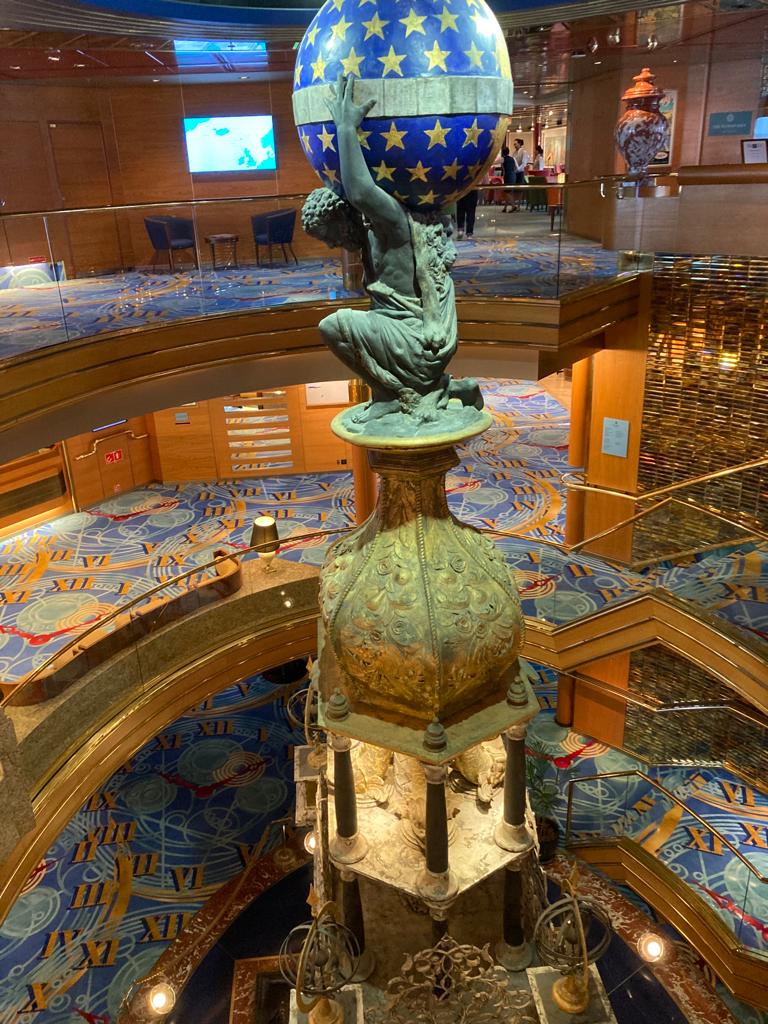
As the four-day journey across the Atlantic progressed, we slipped into a mindless routine largely dominated by food and the need to militate against its effects. So, breakfast would be followed by a brisk one-mile walk – three and a half circuits of the ship; an hour or two reading, lunch—power walk (in my case power amble;) mid-afternoon tea—power amble; reading, cocktails 6.30. Dinner 8.30 and bed.
Walking soon became the highlight of the routine, the vast skies and endless sea. The Atlantic is so immense, the Mediterranean, to my mind, busy and a little overcrowded.
The sea proved hypnotic and highlighted a stark contrast between the superficial—ie the cruise—and the elemental power of wind and sea. It also highlighted the contrast between now and then—then being those early Viking voyages and sixteenth century seamen. The contrast was especially stark when tucking into Eggs Benedict, Lobster Bisque or roast aubergine soup, filet mignon, pan fried pheasant, red snapper, T-bone steaks, and desserts ranging from pavlovas to every kind of parfait.
Our Viking counterparts would be chewing on nuts or dried fish but could at least forgo the compensatory power walk. Likewise, the Tudor seaman with his daily pound of biscuit and gallon of beer, his pound of salt meat every four days, salted cod on Fridays, and occasionally Pease-porridge.
The guilt didn’t last long, our present life a passing blip in a history of hardship and endurance. Enjoy. Nothing lasts forever. Tuck into that filet mignon. Walk if you must—or perhaps a spot of whale watching.
There were ardent whale watchers amongst us. Every so often they’d scream with excitement and point. I saw nothing, not even a fin. I was told to look out for blowholes and on one occasion convinced myself I’d seen one—either that or a fish passing wind.
What really intrigued me though were the birds following in the wake of our stern. These were small, not hardy muscular things, and so far from land. What were they?


They had this magical quality of being easily spotted but never on camera. Too fast. These are my best attempts, visible if you zoom in. Mind you, a glimpsed petrel is better than an unseen whale, I suppose.
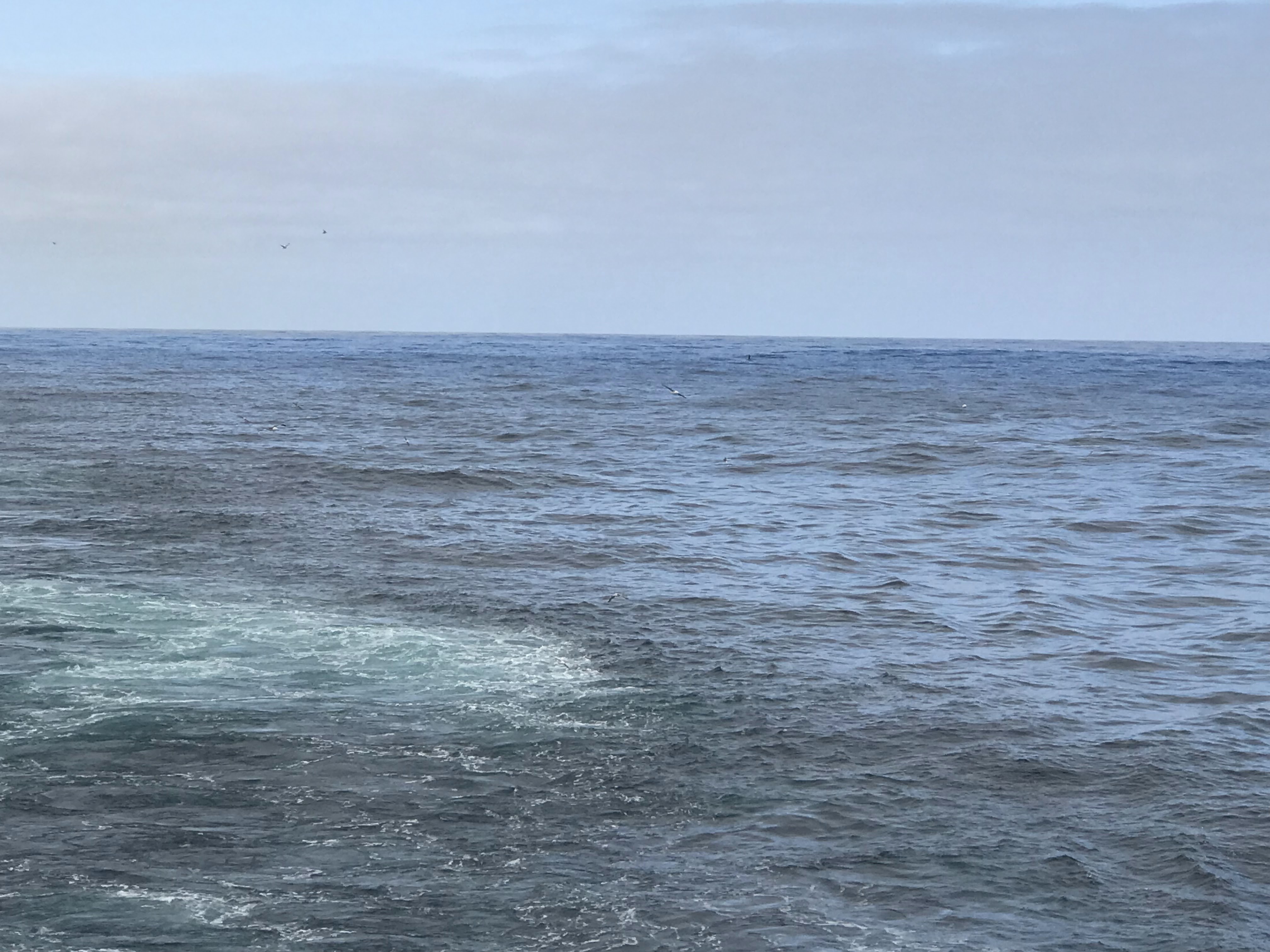

Storm petrels, a whale watcher informed me. I was hooked. Skimming on wind, walking on water. Storm petrels—or Mother Carey’s chickens—what wonderful names. For those early seafarers swallowed and tossed in their small wooden boats, the storm petrels appeared like Dracula's bats, demonic, harbingers of death. Mother Carey’s chickens bringing fresh food for the great sea-witch and her husband Davey Jones.
Breton folklore holds that storm petrels are the spirits of sea captains who mistreated their crew and doomed to spend eternity flying over the sea. Another superstition affirms they are the souls of drowned sailors, others swore they were the devil’s bird. Whosever bird they are, the storm petrel is truly remarkable, spending most of its life at sea, returning to land only to breed. They also live a long time—for a bird—with a life span averaging 25 years.
I couldn’t get close enough to verify this, but they also have a gland above their nasal passage which allows them to excrete the excess salt from their natural diet.
One tradition has it that the petrel’s name is derived from St Peter’s short-lived attempt to walk on water. An alternative explanation is that it comes from the word pitteral, a reference to their ability to pitter patter over water.
I could have watched them for hours, skimming and cresting the waves but that night a storm hit us. They may have been harbingers, but eight of these birds almost came to a sticky end. Worn and battered they took refuge on the ship and were discovered the following morning miserably huddled on deck, looking the worse for wear. There, they allowed themselves to be collected, placed in a box for warmth and later released.

They didn’t look too demonic to me, but they did have a musty sweet smell, the result, I discovered later of the oily plankton soup swirling about in their stomachs. Unfortunately, I forgot to examine their nasal passage.