Friday, 5 January 2024

Life and Death

When I was a child I remember going to Blackpool on a number of occasions. To our left, as we walked along the front, was sky and sea, invariably drizzly and grey. To our right were long terraces of old-fashioned Boarding Houses, all with big windows. One in particular I remember. It revealed a cosy breakfast room and tables clothed in white linen and silver. The lighting was subdued, pink; and it appeared truly magical, like nothing I’d ever seen before. And it was this lure, I’m sure, that attracted ‘regulars’ to Blackpool, year in and year out. It was perhaps a northern thing, dating from a time when factories closed for holiday weeks; there were special trains, and holidays were almost a communal activity. 


I was reminded of this on the ship with the realisation we had become part of a cult. The ‘cruise cult.’ There are cults within cults, in this case that of Fred Olsen or ‘Fred’—referred to in reverent whispers. 

People spoke in quiet pride of the number of cruises they’d been on, some happy to stay on the ship having been to these places before. Like the northerners that once flocked to Blackpool, they liked what they already had. Why change a good thing. We’re talking about people on their fifteenth or eighteenth cruise—far better than any care home alternative—speaking of which, they should just give the care home franchise to Fred. He’d make a far better job of it. Assign their pensions to Fred and be done.


It's foolish to generalise or cast judgement. Every person has their own story. One lady in her eighties ruefully described her knee and hip replacements and upcoming shoulder surgery, the amount of metal in her, and how airport security alarms bleeped from a mile away. She’d booked five cruises for the upcoming year. In her case the impetus to cruise was not just making the best of things, before she became totally immobile. It also reflected a lifetime of  adventuring. As a child she’d experienced the Liverpool blitz and grown up amidst bombsites. In 1957 she bought a Vespa and with a friend drove all the way to a Paris largely untouched by the war. The beauty of a foreign city had proved an eye opener and prompted a life-long wanderlust. Age shouldn’t, and in her case hasn’t ended an adventurous spirit, even if cruising is now the only way it can be released.


Another lady, from Kenya, had travelled all the way from Africa to Liverpool for this particular cruise because she had always wanted to cross the Atlantic to Canada. This lady came from what you would call ‘good stock.’ She had a thousand-yard stare, the kind that examined your soul as you talked. It’s one the of secrets of the Royal Family and the aristocracy in general, an ability to rivet you with a gaze as though what you were saying was the most important thing in the world at that moment. It’s a neat trick, even if at that particular moment we were talking about chocolate eclairs. 


I’ve mentioned the feuding ukulele players, but I mustn’t forget the Irish travellers. They constituted of a patriarch who spent most of his time in the bar getting drunk, and glammed up young ladies, one of whom had a baby in tow. They never got farther than Newfoundland. One account has it that at St Johns they went on the rob, stuffing their loot into the baby’s pushchair. The police were waiting for them at the port and the ship sailed off without them.


And then there was Fred Olsen himself—the actual Fred—a thin ninety-two-year-old man walking with the aid of sticks. He was on board, but I failed to spot him amidst the multitude of elderly gentlemen leaning on sticks. Even so, it was interesting that the owner or other members of the family regularly sail on their own ships and so sample customer experience first-hand.


Our final passenger was ‘Death.’ The first indication manifested itself in two nurses rushing a bent-up figure in a wheelchair down a long corridor enroute to the Medical Centre. We were enroute to the restaurant and our evening meal. A moment or two before dessert—pavlova, my wife had the apple tart—a tannoy switched into life, along with a sombre request for ‘a stretcher party’ to attend the Medical Centre. Speculation was rife, but we had seen the first manifestation, and there was of course only one destination after the Medical Centre when a stretcher is called for.


Being a simple soul, I assumed they’d commandeer a fridge and imagined how over the next few days they keep pushing the ice-cream and sorbets to make space. Later I discovered cruise ships necessarily have their own morgue capable of carrying up to three bodies, more on the very large ships. A cheery thought. 


Though usually close to the medical centre, some can be situated near food fridges as the photo below shows. 


There was of course life outside the ship—and also an absence of it. Whether it was Baie-Comeau, Trois Rivieres,  or Saguenay, we were struck by the absence of traffic. Normally you have to wait some time before you can take a photo without the ubiquitous white van. Here you can almost walk on the road with your eyes shut, assuming there's room in the ship's morgue.




Friday, 22 December 2023

The Fall of Quebec


James Wolfe


I was taught by history teachers who knew a good story would hook small boys and girls. It worked with me and those I subsequently taught. Though no longer fashionable, History abounds in stories of great men; occasionally women, but that then was the nature of things. 

My heart sank whenever  I had to teach economic history. It was hard to get excited about the Spinning Jenny or Arkwright's Water Frame, and the exploitation of women and children, the grime and the smoke was just plain depressing. 


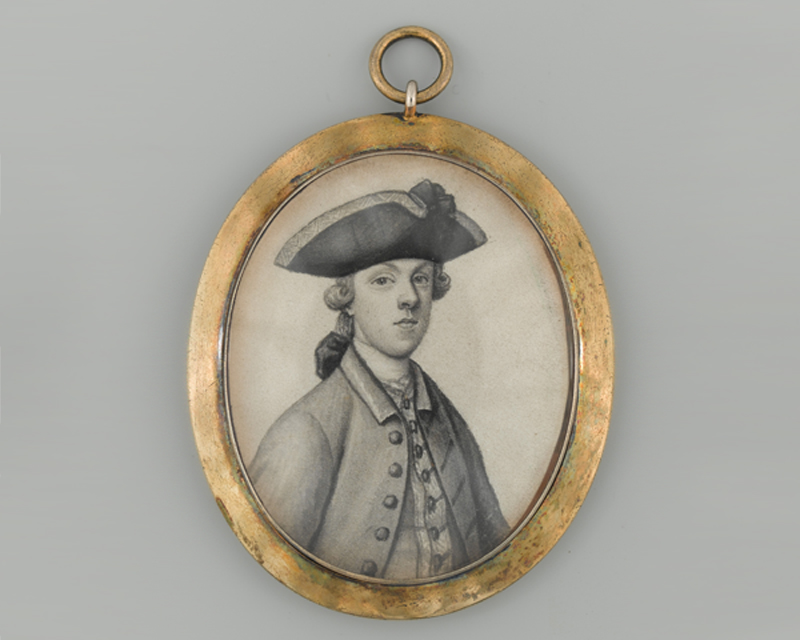
A popular engraving of James Wolfe. He was young, just sixteen when he fought at Dettingen, a bare nineteen when he fought at Culloden.

No. Give me adventure. And on a grand scale. The struggle for world domination between Britain and France. There was Clive of India of course, but we weren't in India. We were up the St Lawrence facing Quebec, and I was trying to imagine the  red and blue uniforms of  C18th soldiers; vivid pinpricks lost in the immensity of the Canadian landscape, forests and hills.


James Wolfe was just 32 years old when, in 1759, he was put in charge of 5000 men and charged with taking Quebec from the French. Wolfe was an experienced soldier, having fought at Dettingen, (1743) Culloden, (1746) and Louisburg (1758). His opponent, Louis Joseph de Montcalm, led a significantly larger though less well-trained force. In June 1759 a British force sailed down the St Lawrence and set up camp on the Île d'Orleans directly facing the apparently impregnable Quebec. 


Painting of Quebec

Wolfe’s first attack in July was repulsed with heavy losses. Wolfe next attempted to force Montcalm’s hand by attacking neighbouring French settlements and farms. The attacks seriously reduced French supplies but failed in their objective in luring out Montcalm, and time was running out for the British. Disease was rife, winter was approaching, and Wolfe himself fell seriously ill. 


In a letter to his mother, Wolfe wrote: “The Marquis of Montcalm is at the head of a great number of bad soldiers, and I am at the head of a small number of good ones that wish for nothing so much as to fight him; but the wary old fellow avoids any action, doubtful of the behaviour of his army.”


At last, a hidden path was discovered up a170-foot cliff two miles upstream from Quebec.

Colonel William Howe crept up it at night, leading a small detachment of men and captured the small French garrison that guarded it. The way was now open for the main British force of 5000, men which deployed themselves on the Plains of Abraham. Wolfe organised them in a shallow horse-shoe formation about half a mile long and two ranks deep. The French rushed out to attack and made the mistake of firing when barely in range. The British waited until the last moment and fired. They advanced a few paces farther and fired again. The effect was devastating and the French fled in disarray. 


Both Montcalm and Wolfe lost their lives in the battle but Quebec was taken—but for how long? Winter had set in forcing the British navy to retreat before the St Lawrence iced over. The now poorly supplied British garrison barely survived that winter but survive they did. 


The dying Wolfe surrounded by his devoted officers. The cult of James Wolfe swept the nation illustrated by the jug below, one of many mementoes of the event purchased up and down the country. 


The new British governor of Quebec, James Murray, pursued an enlightened policy, ensuring the good behaviour of his troops—to women in particular, and cooperating with the Jesuits in maintaining good relations with the French speaking populace. 


The  Ursuline sisters were equally cooperative. Their monastery housed the new British regime and, in exchange, was supplied with food and supplies, which prevented starvation.  The present day Quebec is very much a reflection of what took place a bare  three hundred years ago

Friday, 15 December 2023

Quebec


After a hearty breakfast of kippers and scrambled egg, we hit Quebec, exploring the lower town by ourselves in the morning and embarking on a more arduous organised tour in the afternoon. The lower town is distinctly European, a network of narrow streets packed with tourists. (A Viking cruise ship was berthed close to ours.) Dodging bodies and competing camera angles we explored as much as we could, bought our souvenirs and looked forward to the organised tour, which proved excellent.


Quebec, brooding, mysterious and waiting to be explored.


A street in Quebec leading to . . . . umbrellas


Now this irritated me. Stairs leading to nowhere. The number of tourists who climbed up hopefully and walked down baffled. No wonder the bloody French lost Quebec. Quixotic only goes so far—along with Poutine.


Quebec is distinctly French and in the afternoon our guide, excellent in every respect, reflected this as she took us through the lower town and up the startlingly steep funicular to the upper town. So much history packed into one place.


Champlain, a true hero of France dominates the square of the upper town. It was Champlain who in 1608 created Quebec as the administrative centre of New France. These early French  colonists had hard and difficult lives, many dying early from the savage winters, disease and unsanitary conditions. In 1630 there were a bare 103 colonists rising to 355 in 1640.  

Despite the dangers and suffering, it was men like Chammplain,  and adventurers like  Cartier who explored the great rivers, that all  but handed North America to France on a plate. 

Unfortunately the inertia of the over centralised bureaucracy back home, recognisable in our present 'Establishment' or 'blob' if you will, left these men of ambition and foresight stranded until it was too late. It gave the British their chance and they never let go.


The Chateau Frontenac

The Chateau Frontenac is named after  flamboyant and luxury loving Louis de Buade, Count of Frontenac and governor of  New France off and on from 1672 – 1698.

 The hotel is vast and took over a hundred years to build. It was also the site of two crucial war time meetings. The first Quebec conference 1943 was attended by Roosevelt, Churchill, and in a purely ceremonial role the Canadian PM Mackenzie King who hosted the conference. Stalin was invited. It was at Frontenac they planned the Normandy invasion and the demilitarisation of Germany, and it was there that  the Quebec agreement was signed, spelling out the terms for the coordinated development of nuclear weapons. The room where the meeting took place can be easily seen from the outside—its lights are left perpetually on. 

It was there, also, that the Hitchcock film I Confess, was shot, one of its stars Anne Baxter impressing the staff by smoking fat cigars when off camera.


In 1639 three French Ursuline nuns landed. One of their number was Marie de l'Incarnation who was to dominate the missionary endeavour in New France. 

The Ursuline nuns focused on the education of girls and the care of the needy and sick. In this new raw and hostile environment, they set about learning the languages of the Iroquois and surrounding tribes. They succoured the sick, and educated  children—especially  those of the many mixed marriages. In 1661- 1662, their monastery was attacked by the Iroquois and one of their chaplains was slain and devoured. It was not a happy time.


Two stunning altars. The main one was not directly used by the Ursuline sisters who sat in a separate nave to the right just out of sight. 


The smaller altar shown here on the left of the main altar was the one devoted to the Ursuline sisters.


The tomb of the formidable Marie de l'Incarnation


Montcalm's monument with helpful translation


 Never speak ill of the dead, even so, the praise seemed excessive, and where was the monument to his nemesis, James Wolfe? Hmmph!


As the tour neared its end, I realised our excellent guide had failed to mention Wolfe at all,  the one topic that interested me most: Wolfe and the fall of Quebec. Deliberate omission or not, I couldn’t let it rest. I wasn’t going to.


“Where are the Plains of Abraham?” I asked.


She looked at me sharply. “Far from here. Too far to see.”


I waited. A moment or two later. “But I thought a troop of British soldiers discovered an unguarded path up the cliff face and . . .”


“Ah yes, that.” And in fairness to her she gathered the group and gave a superb and succinct account of how the British captured Quebec.


Walking back down from the heights of Quebec, cannon illustrated what a formidable fortress it was.


And sailing away as twilight thickened into dusk, Quebec put on one last flamboyant show. So did the ship. I couldn't resist the phallic. Simple things appeal to  simple minds. 


Friday, 8 December 2023

The Massacre at Fort William Henry


Our next stop was Baie Comeau, like all the towns along the St Lawrence, essentially French but developed by Colonel Robert R McCormick in 1936. McCormick owned the Chicago Tribune and needed a regular source of paper. Baie Comeau with its forests and lumberjacks, its proximity to the St Laurence proved ideal. 


The open air lumberjack museum was interesting but perhaps over pretty, on the outside at least. Inside, the various buildings allowed glimpses of how hard life was for the lumberjack. 


Another stop was the viewing spot allowing us views of vast tracts of forest and St Pancrace Bay


It was here I had visions of Magua. It was easy to imagine Iroquois and Huron lurking in the trees surrounding us. For that blame Fenimore Cooper. I was ploughing my way through The Last of the Mohicans and now I was immersed in its landscape. 


 Cooper is orotund but a remarkable chronicler of his time, recording near-contemporary events passed down to him from a previous generation. One event was described in vivid detail, and if I go on to quote long passages, it is to give you a flavour of writing fueled by outrage and moral fervour. The event in question is the ‘Massacre of Fort William Henry.’ And his judgement of the French General, Montcalm is damning. 

Montcalm


Montcalm arrived in Canada in 1756 and immediately went on the attack. His first target was Fort Oswego, an isolated British post on Lake Ontario. There he won an almost bloodless surrender. The aftermath though was both vicious and bloody. Despite the surrender, Montcalm’s Indian allies broke in and slaughtered everyone there. Montcalm was embarrassed, using the excuse that as a newcomer to the Americas, he was unused to Indian customs and had been taken by surprise. 


Unfortunately for the honourable Montcalm, the same thing happened a year later. 


Trois Rivieres at the very top is the farthest we travelled down before turning back. Fort William Henry is farther down.


Montcalm’s next target was Fort William Henry, defended by Lieutenant Colonel George Monro. Encouraged by the French victory and the booty that followed, the tribes flocked to enlist in Montcalm’s force—between 1500 and 2000 in all—their appetite whetted.


Greatly outnumbered, Monro appealed for help from the nearby Fort Edward, held by Major General Daniel Webb. The appeal proved worse than useless. Webb’s letter explaining why help was impossible was intercepted, and Montcalm deduced from it that Fort William Henry was on the verge of defeat.


Montcalm urged the garrison to surrender and, impressed by Monro’s gallantry, he offered generous terms, Monro was forced to accept the inevitable. Running out of ammunition, cannons breaking from metal fatigue, and the fort now an open target for the French artillery, George Monro surrendered, once again assured of honourable terms. The garrison would not be taken prisoner. They would be allowed to retreat to Fort Edward with full battle honours on the promise that they would not fight the French for another 18 months. 


As the weary redcoats trooped out, Indian warriors rushed through the gates of the fort murdering the sick and the wounded, digging up graves for scalps and slaughtering all who fell into their hands. 

Montcalm had again failed to control his Indian allies but was not short of excuses. He blamed the victims, arguing that the incident would not have happened if the British had not given rum to the Indians, in the context a strange and unlikely event. He also argued the British would have been safe if they had followed orders and not panicked and run. 


His final and perhaps stronger excuse was that his 8000 well-armed men were unable to restrain ‘3000 Indians of 33 different nations.’ Note the inflated number of Indians.


Early accounts perhaps exaggerate the massacre citing 1500 casualties. Later accounts downplay the bloodshed, suggesting that only 200 were killed. Tough for the ‘only 200’ but perhaps making Montcalm’s failings more acceptable—not though for  Fenimore Cooper: 


“More than two thousand raving savages broke from the forest….and threw themselves across the fatal plain with instinctive alacrity. We shall not dwell on the revolting horrors that succeeded. Death was everywhere, and in his most terrific and disgusting aspects. Resistance only served to inflame the murderers, who inflicted their furious blows long after their victims were beyond the power of their movement. The flow of blood might be likened to the outbreaking of a torrent; and as the natives became heated and maddened by the sight many among them even kneeled to the earth, and drank freely, exultantly, hellishly, of the crimson tide…."


“On every side the captured were flying before their relentless persecutors, while the armed columns of the Christian king stood fast in an apathy which has never been explained, and which has left an immovable blot on the otherwise fair escutcheon of their leader. Nor was the sword of death stayed until cupidity got the mastery of revenge. Then indeed the shrieks of the wounded and the yells of their murderers grew less frequent until, finally, the cries of horror were…. drowned in the loud, long and piercing whoops of the triumphant savages…"


“Montcalm lingered long and melancholy on the strand where he had been left by his companions, brooding deeply on the temper which his ungovernable ally had just discovered.  Already had his fair fame been tarnished by one horrid scene, and in circumstances fearfully resembling those under which he now found himself. As he mused, he became keenly sensible of the deep responsibility they assume who disregard the means to attain the end, and of the danger of setting in motion an engine which exceeds human power to control. Then shaking off a train of reflections that he accounted a weakness in such a moment of triumph, he retraced his steps to his tent.”


In Cooper’s view ‘the massacre' at William Henry “…. deepened the stain which a previous and very similar event had left upon the reputation of the French commander that was not entirely erased by his early and glorious death. It is now becoming obscured by time, and thousands who know Montcalm died like a hero on the plains of Abraham, have yet to learn how much more deficient in that moral courage without which no man can be truly great….

It is probable that (Montcalm) will be viewed by posterity only as the gallant defender of his country, while his cruel apathy on the shores of the Oswego and of the Horican will be forgotten.”

Those words were in mind as we sailed for Quebec. 


Leaving Baie Comeau


And a hypnotic sunset that had me entranced