Thursday, 16 January 2014

A necessary sacrice. Discuss


What goes on in the minds of men and how does chance change destiny? The picture below is one of banal contentment. It’s pleasant but ordinary. Surely nothing extraordinary could ever have impinged on this man’s life. The other picture exudes interest and romance. How did their two worlds collide?

 Major Ranald MacDonell (retired)

 Stepan Shaumian and family
Stepan Shaumian was the Bolshevik Commissar for Baku at a crucial moment in World War 1. Bolshevik Russia was out or the war after the German imposed Brest Litovsk Treaty, but this left the great Baku oil-fields in a precarious position. Germany was desperate for oil, and its ally, the Ottoman Empire wanted both territory and oil. What was Britain to do? The issue became serious when a large Turkish army edged closer to Baku.

 Major Ranald MacDonell was our agent and consul in Baku. He sought to persuade Stepan Shaumian to accept British forces to organise and reinforce Baku’s defence against the Turks. A majority in the Baku Soviet were in favour of this, but greater forces were in play, forces that neither Shaumian or MacDonell controlled.

Britain’s Prime Minister, Lloyd George saw things in the long term. He would rather the Turks held Baku instead of the Bolsheviks. He saw Turkey as a power in decline and thus less of a long term threat than a regenerated Russia – our traditional enemy in ‘The Great Game.’

Moscow held a similar view. It, too, would prefer the Turks to hold Baku rather than the British for exactly the same reasons. As a result the Baku Bolsheviks were urged to oppose categorically the idea of inviting British troops for the defence of the city.
Peter Hopkirk in his book On Secret Service East of Constantinople describes their first meeting using MacDonell’s memoirs:

“I visited Shaumian late one night in his own flat…the door was opened by his small son aged ten. I explained who I was. The small boy made a grimace…then retired a few paces.” He began shouting: “You bourgeois…you damned parasite of the possessing classes.” The shouting brought out Mrs Shaumian. “After some laughter I was ushered in to the presence of the great man.” He found the revolutionary sunk in a deep chair poring over a thick file which he laid aside as MacDonell entered. “The room radiated middle class contentment. At one end of the big table was laid Shaumian’s supper. At the other end were school books lately studied by the small boy."

Shaumian greeted his visitor warmly and opened a bottle of wine. On a personal level the two men hit it off, both enjoying long, heated arguments deep into the night. Despite the ideological gulf, Shaumian appreciated MacDonell’s dry wit, and MacDonell admired Shaumian’s honesty, the way he dealt with food shortages and how his first recourse was to persuade rather than terrorise.

MacDonell sought hard to persuade him. General Dunsterville’s forces were in marching distance, and most of Baku soviet saw the advantage in British aid against the Turks, now dangerously close. But Shaumian held firm to Moscow’s line: British help must be rejected.

Shaumian at least knew where he was coming from. MacDonell however didn’t appreciate, until it was too late, that the British Government had no intention of aiding the Bolsheviks. He was now close to the family, the small boy who had earlier harangued him as a class enemy now a firm friend:

“Often  while his father read through a pile of documents we would play with his toy railway. I was usually the deposed Grand Duke, who had become a shunter. I was always sworn at and sometimes hit of the head for making mistakes, or for being late with the food train. Once I was executed. I often marvelled how Shaumian could work through all the din…but he said he would not have the children out of the room for anything. They were to him a greater inspiration than all his ideals.”

Despite the friendship MacDonell at last realised British interests would be best served by Shaumian’s overthrow. He was aware, too, that others in the Soviet shared similar views and that plots were already afoot. Shaumian sensed this new ambivalence and relations between the two men cooled, more so after MacDonell, on direct orders from London became actively involved in the coup. The coup failed. Shaumian almost certainly knew of MacDonell’s involvement but for old times sake allowed him to escape.

Shaumian was less fortunate. He was ousted a few weeks later and was forced to flee. He and his twenty five companions were captured in the anti Bolshevik town of Krasnovodsk. The town’s Commandent, a tough Cossack called Kuhn was at a loss what to do with them. To cut a complex story short, Britain washed its hands of him and Shaumian, with his companions were shot.

The two pictures below sum up a sad, contrasting story 

The execution of Stepan Shaumian and fellow Bolsheviks

The alternative

Thursday, 9 January 2014

In search of a Madeleine


In ‘Remembrance of Things Past,' Proust maunders on about the taste of a Madeleine, an unremarkable small cake. He examines ‘voluntary memory along with its limitations, the chief one being that because it's selective it is necessarily partial, and thus you lose the ‘essence’ of what was. 

In contrast the involuntary memory captures the moment, and chief amongst these in Remembrance of Things Past is the consuming of an innocent Madeleine:

"No sooner had the warm liquid mixed with the crumbs touched my palate than a shudder ran through me and I stopped, intent upon the extraordinary thing that was happening to me. An exquisite pleasure had invaded my senses, something isolated, detached, with no suggestion of its origin. And at once the vicissitudes of life had become indifferent to me, its disasters innocuous, its brevity illusory – this new sensation having had on me the effect which love has of filling me with a precious essence; or rather this essence was not in me it was me. ... Whence did it come? What did it mean? How could I seize and apprehend it? ... And suddenly the memory revealed itself. The taste was that of the little piece of madeleine which on Sunday mornings at Combray (because on those mornings I did not go out before mass), when I went to say good morning to her in her bedroom, my aunt LĂ©onie used to give me, dipping it first in her own cup of tea or tisane. The sight of the little madeleine had recalled nothing to my mind before I tasted it. And all from my cup of tea."

Well, knock me down with a feather, I once would have said, but I have experienced the process from the other end, or perhaps from a different angle.


As a child I was an avid reader, Evered Avenue library a home from home. At fourteen I read Henry Treece for the first time. The book was Jason. Or so I thought. There was a passage in it that has haunted me ever since. The paragraph describes a young boy witnessing a ritual dance at night, and Treece brilliantly evokes the mystery of fire and drums, and men’s pounding feet on night earth. He brought Bronze Age Greece to life. Liverpool vanished.

For Proust the Madeleine was a happy accident. For me it would be a deliberate act of time travel. I would buy Jason and read it again. Would that same passage take me back to the essence of a moment, or would it now read prosaic, the memory made magic by chance?


The parcel arrived, a first edition and in fair condition, the cover exactly as I remembered. I sat down with a bottle of good port and began to read. It was exactly as I remembered – except for one thing. The paragraph on drums and fire and pounding feet wasn’t there. 

This couldn’t be. It was akin to Proust staring at his plate, the Madeleine replaced by a donut.
There could be only one solution. I'd read the wrong 'Madeleine.' Treece wrote a trilogy on this period. Perhaps the passage was in another book - Electra. 


The search continues for my Madeleine moment. I’ll keep you informed. 

Post script
I did read one interesting review on Jason, but the reader, I think, was worrying the wrong end of the stick. He accuses Treece of being misogynist, castigates him for this portrayal of women. In fact the book is far better than that, though I concede if I was a woman I might not be best pleased. Jason has issues with women, not the author. Treece beautifully conjures up a damaged Mycenaean hero, one who experienced a traumatic human sacrifice to the Mother Goddess as a child and who, in consequence, bolsters up his own sense of masculinity by a defensive and self-serving chauvinism. For those who love unobtrusive poetry and crave to lose themselves in the far past, try Jason, Electra or other works by Henry Treece.  

Friday, 3 January 2014

The photo-shoot


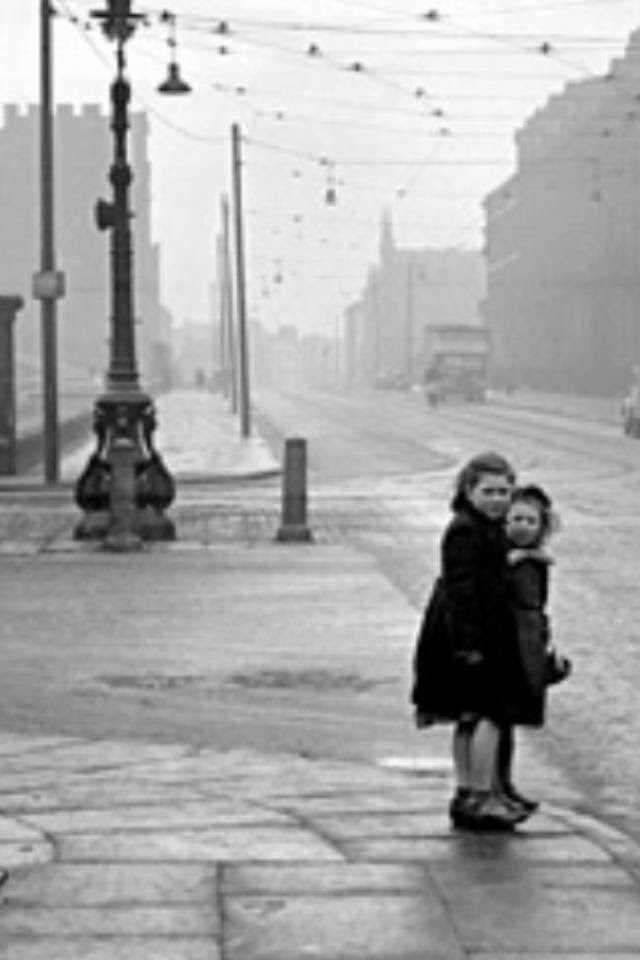
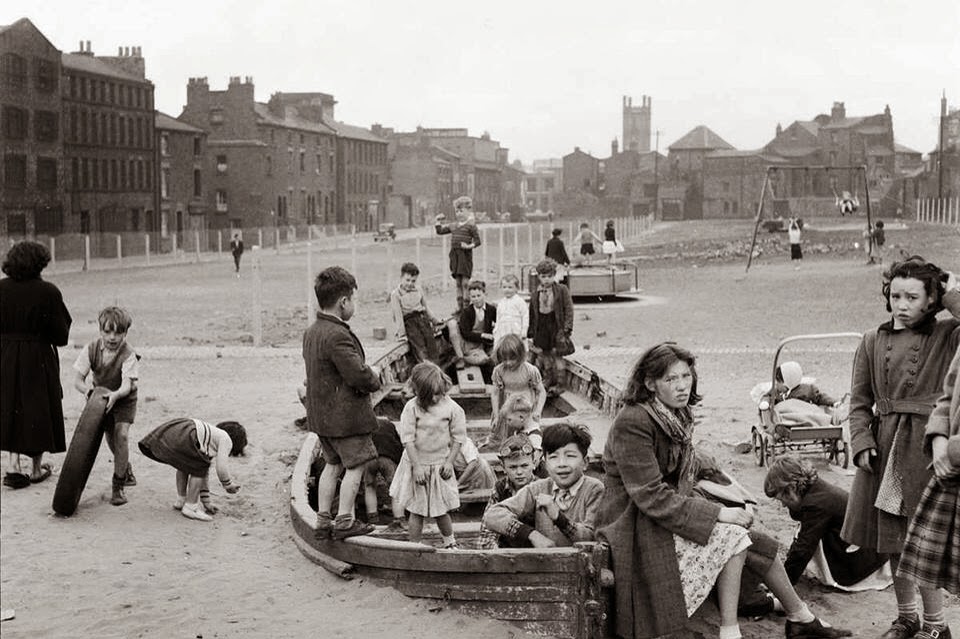
Quick...hurry. They're getting away!


"Can't catch us, Missus"


"Caught one at least. Come here, son. There's someone wanting to see you."


Run, they're coming!


Down here. They'll never find us!


"Someone chasing you, miss?"

 "Child-catchers. They're close. I can smell them."


" I think we're safe"


"No use running, they're gonna find us anyway"


"I'm gonna pull my tongue out, me."


"We're gonna fight the bastards...soft-head's praying."


 We've a nice catch here.

"Don't worry boys and girls, Mr Dylan won't harm you."


Picking the best for Mr Dylan


The photo-shoot. Bob Dylan in Liverpool


Saturday, 28 December 2013

A pub in time


 The Blackbull was where I had my first drink. Fortunately not in this particular building because that would make me over 120 years old. The road to the left (Warbreck Moor) would then have led to countryside; a few years later redbricked terraced housing for the respectable working class were built. Note though the lamp in the foreground and how, though the pub changes, this focal point remains essentially the same. For me, as a child, it was the 'gateway' to Aintree and home.


This was the 'new' BlackBull - with its own policeman. This man faced a demanding task directing such heavy traffic


 The children look much the same but the policeman has gone.Now there are trams


 The tramlines remain; the trams themselves replaced by buses.


 I hope the Blackbull remains forever.


Friday, 20 December 2013

Small Eye problem

The retinas have left the building.

Back soon.

Merry Christmas All

Mike

Friday, 13 December 2013

I don't know. Don't tell me.


I grew up in an age of conformity, nudged and directed on how and what I should think by parents, church and school. There was no escape from this, no obvious escape, and to be fair for a long time I saw no reason to escape: obey and be happy.

And then things changed. I became a Marxist; revolutionary in my thinking but not fully appreciating I was following a different kind of authority. Nor I suppose did it matter. It was an authority I agreed with. I read comprehensively from Das Kapitol (I managed three chapters) to the obscurest of tracts and even more obscure pamphlets. I could smell heretical splinter groups from fifty yards and treat them with suitable disdain. I was argumentative, pumped up and primed.

Where am I now?

I’m back in the late fifties surrounded by new orthodoxies and realising more fully the original impetus to rebel, this time against a more dangerous and effective conformity enforced by mainstream media.
The bottom line is I just don’t like being told what to do or think – although of course we’re never ‘told’. We are nudged and cajoled along designated patterns of thought. Sometimes it’s blatantly obvious like politicians going on and on about ‘Hard working families’ or ‘The right thing to do.’ Other times it’s more subtle, so much so it becomes part of the wall paper.

So I’m siding with the ‘naughty’ boys in the class -‘naughty girls,’ if you will. There are politicians and comedians who, instead of arguing a point or constructing a good joke, will say ‘Daily Mail’ and elicit a Pavlovian response, their audience suitably conditioned to snigger or jeer. I’m not championing the Mail. I’m championing its right to exist and attacking the sheep-dog sneer, keeping the flock in line. It must be said the Mail uses similar tactics, their dog whistle being the BBC - and that, too, has a right to exist, though perhaps not, like the Renaissance Church, being the only pulpit in the land.

So, Murdoch - ‘the dirty digger’, Fox News, UKIP, anti EU, anti immigration, the death penalty:  Bugger the arguments for and against. The first sniff I get that ‘Teacher’ doesn’t like them, the more sympathetic I become. Dog whistles alarm me and I don’t care who’s blowing them. They have all the profundity of wrist-bands: short-cuts to thought without the thought. They create herds, all those within, sharing the warmth of like-minded opinion, encouraged to moo at the heretics without.

New developments in cyber technology are designed to make such ‘whistles’ exclusive and more strident, raising the walls between the various ‘tribes’. Google and other companies are designing ever more subtle algorithms that analyse their individual users’ cultural, social and political preferences, their ‘searches’ and ‘suggestions’ in future geared to and reinforcing individual prejudices. Soon we’ll have Gated Communities of thought – each one the creature of corporation, government or interest group. And for the proles (I use the word in the 1984 sense) we’ll have the Game-ificaction of news, where grazers can click on politicised games with closed outcomes but encouraging and reinforcing a particular point of view.

My problem is I don’t have a particular point of view, other than resisting being told what I should do.  I also struggle not to tell others what they should do, which is hard because I love argument. 

A grouch without a cause. 

 Big problem.

 Like many, I’m a collection of labels none of which intellectually cohere: Bolshevik, libertarian, Hobbesian, Christian, cynic, anarchist, totalitarian, conservative (with a small c). They are labels covering flux, stretching quantum uncertainty to unforeseen limits.

  I don’t know, but don’t tell me.

Getting back to algorithms, Face Book is also one of these companies refining their own. It has one redeeming feature. For all but the narcissist, who wish only to read what they agree with, its Home Page allows an eclectic and diverse range of views. Mine is like a wild and overgrown garden and I wouldn’t uproot or prune a single shoot or bloom. Family and  friends, – new and historic share their prejudices and views (as do I) Scottish Nationalist, Scouse, rednecks and Christian, ex –students, the vaguely liberal, socialist, Neo-Cons to the right of Genghis Khan, writers – some whom shamelessly pimp books, the couldn’t care less – even Canadians. They are all there. Who would want a single point of view when there are so many? It’s the difference between the market place and the mall, and it suits me just fine.

The dream of being super-rich and holding a Home Page party in a fine hotel with good beer and two or more hog-roasts is an attractive one – the idea of arguing, sharing and enjoying diversity. A dystopian but probably more realistic outcome might be everyone finding their own particular table of like-minded souls.

 It may be argued that gated communities of thought are a necessary and predicable reaction to the danger of tyrannical orthodoxy, Others may argue they are intellectual care homes, and point out that it was a similar withdrawal from polity that contributed to the decline of Roman Britain.

 I don’t know.

* An interesting article on how our brains are being modified by intense social interaction. 

Friday, 6 December 2013

Suspicious minds


 I was well into my latest novel when I heard a faint but persisting rustling. I looked over the screen, through the window, up the drive, embankment and the small patch of wilderness that links our front garden to the road.

No doubt about it. Someone was up there rummaging in our hedge and trees.

I didn’t act immediately. It was warm inside, I was well into the chapter, and besides she/he may just have been waiting for the bus…and was bored.

I kept on writing.
The bus came and went.
The rustling persisted.

I went upstairs, the front bedroom offering a better view of the hedging and road. There was no doubt about it. Mystery person was playing about with our hedge.

Territorial anxiety, anger, competed against the fact I was holding a fresh cup of tea, the fact it was freezing outside, and a general ‘British’ reluctance to cause a fuss. 

I tried to return to my work.

Rustle…rustle…rustle…

I could stand it no longer. I didn’t even put on any shoes. I raced out the house, dark suspicions fomenting in my mind. Some neighbours didn’t like our trees. They blocked their houses from ours. They also blocked a view from theirs. Maybe the mysterious rustler was poisoning our trees. Paranoia comes easy to the Celtic mind.

I burst on to the road and confronted a  lean, elderly lady with piercing blue eyes. She had a large green bag and some shears. I had a large false smile.

“Excuse the curiosity, but what are you doing?”

“I am sorry. I was pinching your pine needles.” She pointed to the pavement where there was usually a large and obstructive mound. “They’re ideal for my compost bins. But in exchange I’m pruning your hedge. It will grow thicker. I’ve taken a Hedging Course in Usk College. I hope you don’t mind.”

Mind, I could have kissed her, except she was sweaty from all her exertions. Trimming our hedges and trees that otherwise block the pavement is a yearly but onerous chore. She could have all the pine needles she wanted. I told her so. 

A residue of suspicion remained. Was she in favour of our little bit of wilderness or not? Was this a subtle foray? I introduced the subject of hedgehogs, waxed lyrical about a family of hedgehogs I’d seen in the bushes.  She pointed out an old wasps nest in the hedging and explained the lifecycle of wasps. Suspicion evaporated. My wilderness was safe in her hands; a kindred spirit though still sweaty.  


I’m telling you, there are times I really believe we live in the mythical village of Nutwood – something entirely meaningless unless you know Rupert Bear.